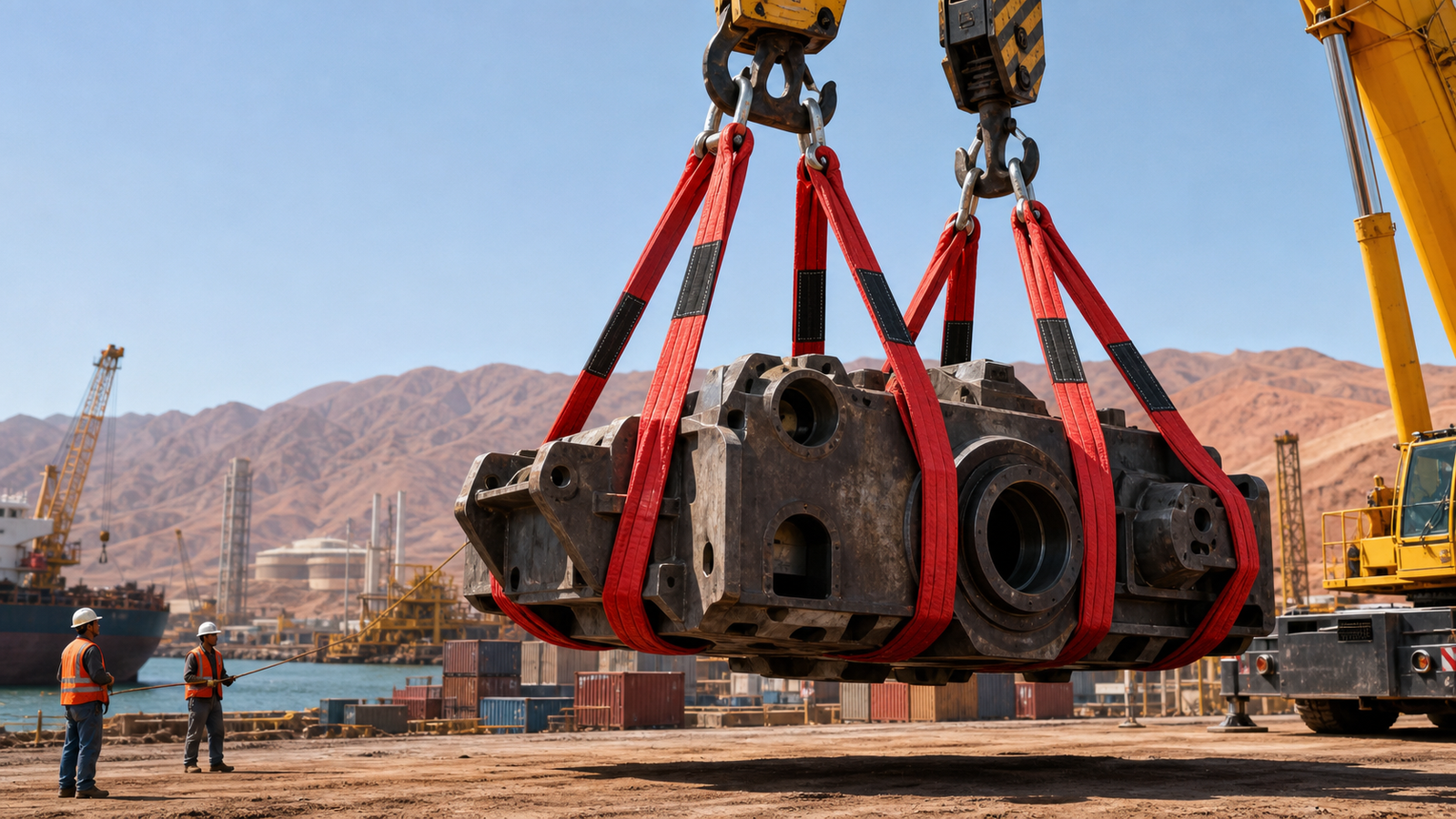
Across Latin America’s most demanding industrial sectors—from the copper mines of Chile’s Atacama Desert to the offshore oil platforms off Brazil’s coast, from the heavy manufacturing plants of Mexico to the port logistics hubs of Panama—the safe and efficient lifting of massive loads is a daily operational reality. When loads exceed 10 tons, when geometries are irregular, or when workspace is constrained, the choice of lifting equipment becomes critical.
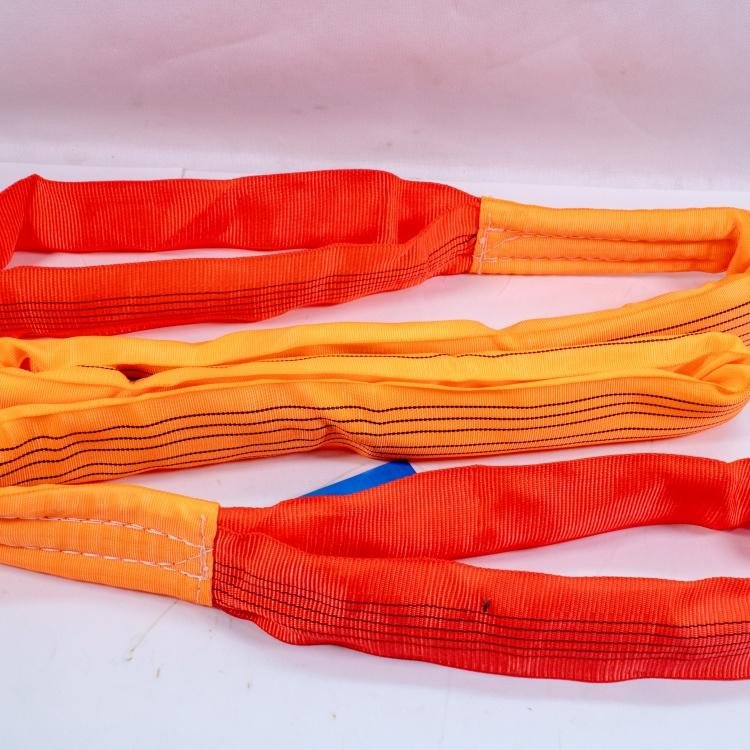
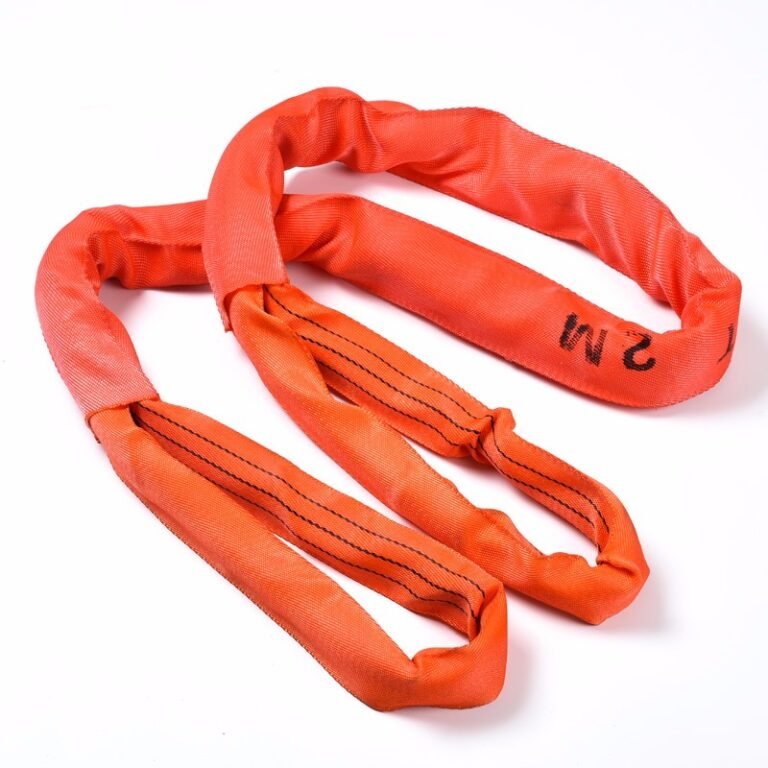
The round sling—a continuous loop of high-tenacity polyester fibers enclosed in a protective cover—has emerged as the preferred solution for these heavy-duty applications. Unlike flat webbing slings or traditional chain slings, polyester round slings offer an exceptional combination of strength, flexibility, and load protection that makes them indispensable in heavy industrial environments. Under EN 1492-2, these endless round slings are rated for Working Load Limits (WLL) up to 100 tons and beyond.
This round sling applications guide examines the key industries and scenarios where heavy-duty round slings prove their value, the technical considerations for selecting the right sling, and the critical safety protocols that protect both personnel and equipment. We will reference international standards including EN 1492-2, ASME B30.9, and regional LatAm requirements such as Brazil NR-11, Mexico NOM-151, and Chile NCh 2245.
1. Why Round Slings Excel in Heavy-Duty Applications
The Design Advantage
A round synthetic sling consists of a continuous loop of 100% high-tenacity polyester fibers forming the load-bearing core, enclosed within a seamless, tubular protective cover. This construction offers several distinct advantages for heavy industrial lifting:
- Exceptional Strength-to-Weight Ratio: Round slings deliver high load capacity in a remarkably lightweight package. A round sling with a WLL of 50 tons weighs a fraction of what a chain sling of equivalent capacity would weigh.
- 360° Load Stability: The continuous-loop design provides uniform load distribution and stability in all directions.
- Superior Flexibility: Round slings adapt their shape to the items being lifted, even those with particular or irregular outside dimensions.
- No Stitching Vulnerability: Endless round slings have no stitching, making them less delicate and less sensitive to friction against the load compared to flat webbing slings.
- Versatility Across Hitch Types: Round slings may be used in vertical, choker, or basket hitches. They can be used in choker configuration without specific wear problems.
Polyester vs. Alternative Materials
The choice of polyester as the primary material for heavy-duty round slings is no accident:
| Property | Polyester | Nylon | Chain/Wire Rope |
|---|---|---|---|
| Strength-to-Weight Ratio | Excellent | Excellent | Poor |
| Flexibility | Excellent | Excellent | Poor |
| Surface Protection | Excellent | Excellent | Poor |
| Moisture Resistance | Excellent (<0.4% absorption) | Poor (10-15% strength loss when wet) | Excellent |
| Chemical Resistance | Resists most acids | Vulnerable to acids | Variable |
| UV Resistance | Good | Poor | Excellent |
| Temperature Range | -40°C to +100°C | -40°C to +100°C | Wider range |
Polyester round slings are resistant to most acids but should be protected from strong alkalies. Their operating temperature range of -40°C to +100°C makes them suitable for most industrial environments.
2. Heavy-Duty Industrial Applications: Industry by Industry
2.1 Heavy Manufacturing and Fabrication
In heavy manufacturing plants across Latin America—steel mills, automotive assembly lines, and industrial equipment fabrication—round slings are used daily to move massive components.
Typical Lifts:
- Steel coils and plates weighing 10-50 tons
- Heavy machinery and press components
- Fabricated steel structures and assemblies
- Large castings and forgings
Why Round Slings:
The flexibility of a polyester round sling allows it to conform to irregularly shaped loads without damaging finished surfaces. The soft, pliable construction is ideal for lifting delicate or fragile equipment. Additionally, the lightweight nature of synthetic slings means crane capacity is not consumed by heavy rigging hardware.
2.2 Offshore Oil and Gas
The offshore oil and gas sector—particularly active along Brazil’s pre-salt fields and Mexico’s Gulf Coast—presents some of the most demanding lifting conditions in the world. Harsh marine environments, corrosive salt spray, dynamic loads from vessel motion, and the need for absolute reliability make round slings an essential tool.
Typical Lifts:
- Subsea equipment and pipelines
- Offshore platform modules and components
- Drilling equipment and risers
- Heavy machinery for platform installation
- Deepwater recovery operations
Why Round Slings:
Specialized offshore lifting slings such as the FLEXOR round sling use advanced fibers like Dyneema® SK78 with double covers providing maximum protection against cuts, punctures, snags, abrasion, and UV exposure. These slings maintain their shape during precision lifts and resist natural flattening in harsh offshore conditions. Some advanced round slings using Spectra fiber have even been used to redirect icebergs threatening offshore platforms.
2.3 Mining and Heavy Extraction
Mining operations across the Andean region—from Chile’s copper mines to Peru’s gold and silver operations to Colombia’s coal fields—require lifting equipment that can handle extreme loads in rugged conditions.
Typical Lifts:
- Mill liners and crusher components
- Heavy mining equipment and parts
- Large-diameter pipes and conduits
- Concentrate and ore handling equipment
Why Round Slings:
Round slings are particularly common in mining, where they are used to move large objects such as pipes, beams, and heavy equipment. Their ability to handle loads up to 300 tons with effective lengths of up to 80 meters makes them suitable for the most demanding mining applications. For polyester round slings complying with AS 4497:2018, the minimum breaking load is seven times the WLL, with individual proof loading to two times the WLL.
2.4 Construction and Infrastructure
Large-scale infrastructure projects—bridges, dams, high-rise buildings, and power plants—require the movement of precast concrete elements, steel structures, and heavy building materials.
Typical Lifts:
- Precast concrete beams and columns
- Steel girders and trusses
- Heavy building materials
- Wind turbine components
Why Round Slings:
For many general-purpose construction lifts, a polyester round sling is the best all-around choice because it is lightweight, flexible, easy to handle, and gentler on finished surfaces. Round slings are increasingly used in wind turbine installations for handling irregularly shaped components such as turbine blades and tower sections.
2.5 Port and Maritime Logistics
Latin America’s major ports—Santos (Brazil), Valparaíso (Chile), Callao (Peru), Manzanillo (Mexico), and Balboa (Panama)—handle millions of tons of cargo annually. The lifting and movement of containers, heavy machinery, and bulk materials demand reliable rigging equipment.
Typical Lifts:
- Shipping containers
- Heavy machinery and vehicles
- Bulk cargo handling
- Shipbuilding and repair components
Why Round Slings:
Round slings are commonly used in port loading and unloading operations. Their lightweight construction makes them easy to handle in busy port environments, while their high strength ensures reliable lifting of heavy cargo.
2.6 Renewable Energy
The growing renewable energy sector across Latin America—wind farms in southern Chile and Brazil, solar installations in Mexico and Chile, and hydroelectric projects throughout the region—presents unique lifting challenges.
Typical Lifts:
- Wind turbine blades and tower sections
- Solar panel arrays and mounting structures
- Hydroelectric turbine components
- Transmission equipment
Why Round Slings:
The flexibility and surface protection properties of round slings make them ideal for handling sensitive components such as wind turbine blades. The ability to conform to irregular shapes while protecting finished surfaces is critical in these applications.
3. Capacity, Configuration, and Selection Considerations
Understanding Working Load Limits (WLL)
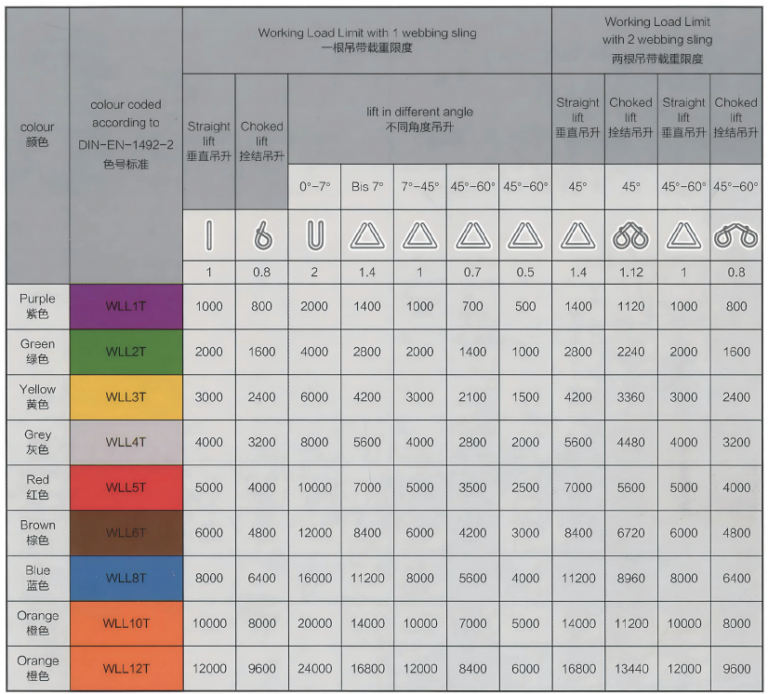
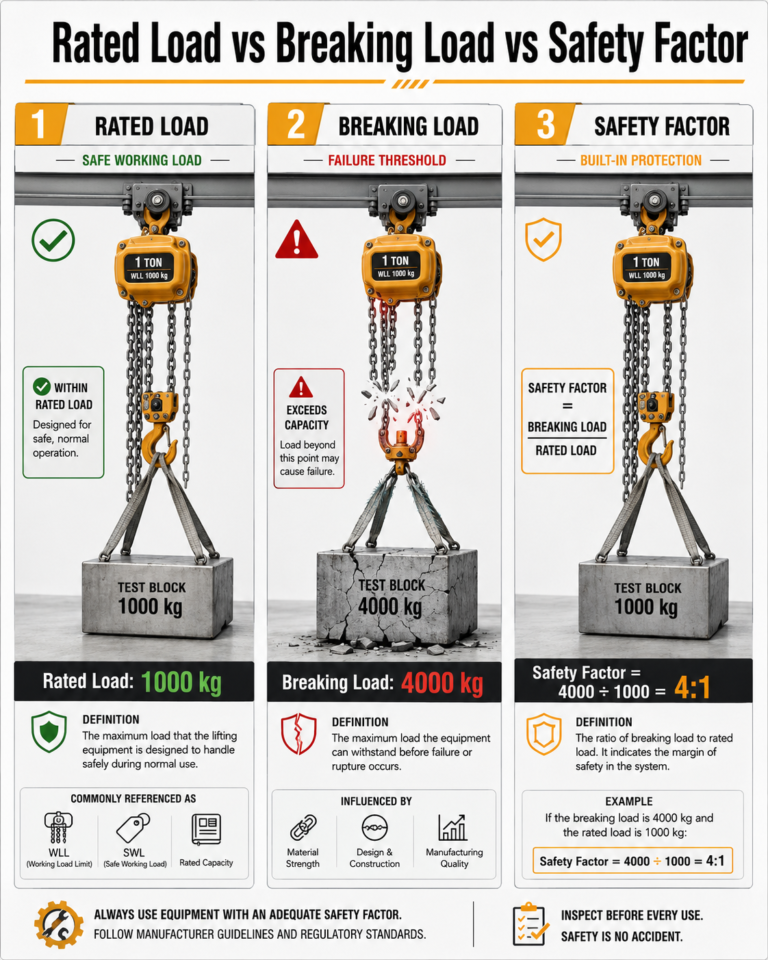
Round slings under EN 1492-2 are manufactured with a minimum safety factor of 7:1. This means a sling with a WLL of 10 tons has a minimum breaking strength of 70 tons. The sling’s WLL is clearly marked on a blue label that includes the manufacturer’s symbol, WLL, length, CE marking, and handling instructions.
Capacity by Hitch Configuration
The rated WLL of a round sling applies to a straight vertical lift (M = 1.0) . Different hitch configurations affect the effective capacity:
| Hitch Configuration | Efficiency Factor | Example: 10T Round Sling |
|---|---|---|
| Straight Lift (Vertical) | 1.0 | 10.0 Tons |
| Basket Hitch (0°–45° from vertical) | 2.0 | 20.0 Tons |
| Basket Hitch (45°–60° from vertical) | 1.4 | 14.0 Tons |
| Choker Hitch | 0.8 | 8.0 Tons |
The Standard Formula for Basket Hitches:
WLL (at angle) = WLL (Vertical) × Number of Legs × Cos(θ)
Where θ is the angle between the vertical axis and the sling leg.
Example: A 10T round sling in a basket hitch with 2 legs at a 45° angle from vertical:
10T × 2 × Cos(45°) = 10T × 2 × 0.707 = 14.1T Safe Working Load
⚠️ CRITICAL NOTICE: If the angle from vertical exceeds 60°, the Cos(θ) drops below 0.5. This drastically compromises the structural integrity of the lift, and alternative rigging configurations must be deployed immediately.
Color Coding and Identification
Under EN 1492-2, round slings follow the same color coding system as flat slings for quick visual identification:
| Color | WLL (Tons) | Basket 0°-45° | Choker |
|---|---|---|---|
| Violet | 1.0 | 2.0 | 0.8 |
| Green | 2.0 | 4.0 | 1.6 |
| Yellow | 3.0 | 6.0 | 2.4 |
| Grey | 4.0 | 8.0 | 3.2 |
| Red | 5.0 | 10.0 | 4.0 |
| Brown | 6.0 | 12.0 | 4.8 |
| Blue | 8.0 | 16.0 | 6.4 |
| Orange | 10.0+ | 20.0+ | 8.0+ |
For capacities above 10 tons, the orange color continues with higher WLL ratings up to 50 tons and beyond.
4. Edge Protection: A Critical Consideration
While round slings are robust and versatile, they share the same vulnerability as all synthetic lifting equipment: sharp edges.
As with any fiber product, round slings can be damaged if they come in contact with sharp edges. The protective cover is designed to shield the load-bearing core, but it is not impenetrable. A sharp steel edge or abrasive concrete corner can compromise the outer cover, exposing the core yarns to damage.
Protection Solutions
1. Corner Protectors and Edge Guards
These accessories prevent direct contact between the sling and the load’s sharp corners, distributing pressure evenly across the sling surface.
2. Protective Sleeves
Round slings can be protected, totally or in part, with a special PVC hose or directly coated with polyurethane against wear and abrasion. Some manufacturers offer slings with extra protection sleeves for demanding applications.
3. Specialized Cover Materials
Advanced round slings feature covers made from materials such as DURA-1200 sleeves that offer maximum protection against cuts, punctures, snags, and abrasion.
🔧 MANDATORY PRACTICE: Whenever lifting loads with sharp or abrasive edges, edge protection is not optional—it is mandatory. The strength of a round sling is only affected after the covers have been worn through and the cores start to abrade. Protecting the cover protects the core.
5. Inspection and Maintenance for Heavy-Duty Applications
The demanding environments of heavy industry accelerate wear on rigging equipment. Regular inspection under ASME B30.9 and EN 1492-2 is essential.
The Three-Tier Inspection System
| Inspection Type | Frequency | Performed By | Scope |
|---|---|---|---|
| Initial Inspection | Upon receipt | User / Supervisor | Verify tag matches order, rated capacity meets requirements |
| Frequent Inspection | Each day or shift before use | User / Designated person | Check tag legibility, inspect for damage, wear, irregularities |
| Periodic Inspection | Annually (Normal); Monthly-Quarterly (Severe) | Qualified inspector | Comprehensive documented inspection |
ASME B30.9 Removal from Service Criteria
According to ASME B30.9, a polyester round sling must be taken out of service immediately if any of the following conditions are present:
- Missing or illegible sling identification tag
- Acid or caustic burns
- Evidence of heat damage or weld splatter
- Holes, tears, cuts, abrasive wear, or snags exposing the core yarns
- Broken or damaged core yarns
- Discoloration, brittleness, or stiffness indicating chemical or environmental damage
⚠️ CRITICAL NOTICE: If the outer cover is compromised, there is no way to know whether the damage extends to the core yarns. If core yarns are visible, assume their strength has been compromised and remove the sling from service immediately. A small cut, burn, tear, or hole can compromise the strength of the sling when under load.
Storage Best Practices
To extend the service life of heavy-duty round slings:
- Store in a well-ventilated, dry location away from direct sunlight
- Hang slings on corrosion-resistant, non-metallic pegs
- Keep clear of ground contact, welding stations, and chemical storage areas
- Protect slings from UV degradation when stored outdoors
Conclusion
The round sling has proven itself as an indispensable tool for heavy-duty industrial lifting across Latin America and beyond. Its combination of exceptional strength-to-weight ratio, flexibility, surface protection, and compliance with international standards such as EN 1492-2 and ASME B30.9 makes it the preferred choice for the most demanding applications—from offshore oil and gas to mining, heavy manufacturing, construction, and port logistics.
When selecting a heavy-duty round sling for your operation, consider:
- The total load weight and required WLL
- The hitch configuration and angle factors that affect capacity
- The edge protection required for your specific load
- The environmental conditions (temperature, UV exposure, chemicals)
- The inspection and maintenance protocols needed to ensure continued safe operation
By understanding the capabilities and limitations of polyester round slings, and by implementing rigorous inspection and safety protocols, engineering teams and safety officers can ensure every heavy lift is executed safely, efficiently, and in full compliance with both international standards and local LatAm safety mandates.
📋 Need a Heavy-Duty Round Sling Selection Guide for Your Team?
Download our LatAm-Compliant Round Sling Selection & Inspection Reference—includes EN 1492-2 capacity tables, angle factor calculations, hitch configuration guides, and pre-use inspection checklists. Designed for engineers and rigging supervisors across Brazil (NR-11), Mexico (NOM-151), and Chile (NCh 2245).
[Download the Round Sling Reference Guide Now]