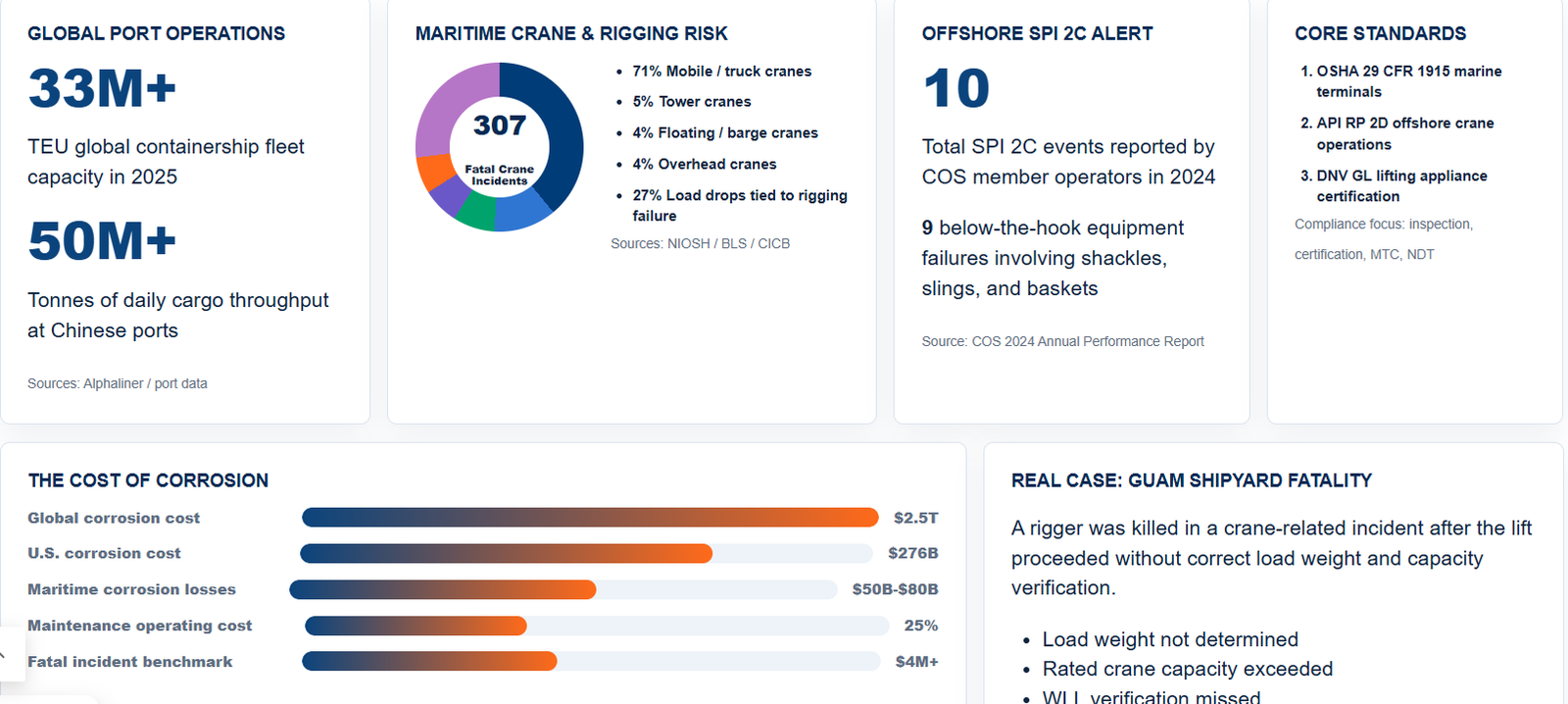
The maritime environment is one of the most punishing operational theaters for any lifting equipment. Salt spray, humidity, dynamic vessel motion, confined workspaces, and the constant threat of corrosion and abrasion create conditions that quickly degrade inferior rigging gear. From the bustling ports of Santos and Valparaíso to the offshore oil platforms off Brazil’s pre-salt fields and Mexico’s Gulf Coast, the demand for reliable, durable, and lightweight lifting solutions is paramount.
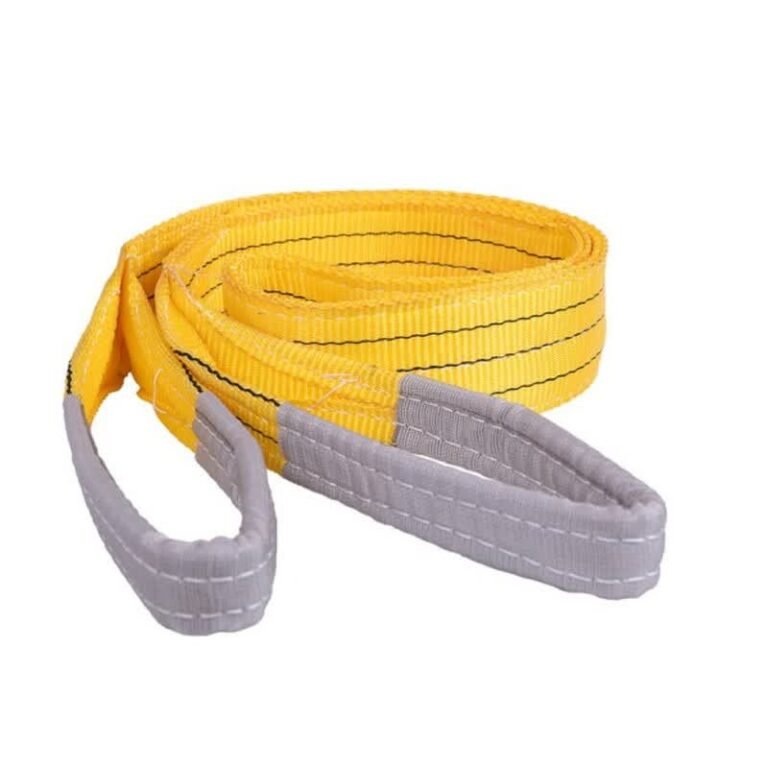
The round sling has emerged as the preferred choice for marine, port, and offshore applications. Its unique combination of high strength-to-weight ratio, corrosion resistance, flexibility, and surface protection makes it ideally suited for the challenges of saltwater environments. Under EN 1492-2, ASME B30.9, and regional LatAm standards including Brazil NR-11, Mexico NOM-151, and Chile NCh 2245, these polyester round slings deliver the performance and safety that maritime operations demand.
This guide examines the specific advantages of round slings for marine lifting, the key applications in ports, shipyards, and offshore installations, and the critical selection and safety considerations for these demanding environments.
1. Why Round Slings Excel in Marine Environments
The Corrosion Challenge
In marine environments, corrosion is the primary enemy of lifting equipment. Steel wire ropes and chain slings require constant lubrication, regular inspection for rust and pitting, and eventual replacement due to corrosion-induced weakening. Synthetic round slings offer a fundamental advantage: they do not corrode.
Polyester fibers are inherently resistant to saltwater, moisture, and the corrosive effects of marine atmospheres. Unlike steel, which can lose significant strength through rust and pitting, polyester round slings maintain their structural integrity even after prolonged exposure to salt spray and humidity.
Lightweight and Easy to Handle
Marine and offshore operations often take place in confined spaces—on vessel decks, inside ship holds, or on offshore platforms where workspace is at a premium. The lightweight nature of synthetic round slings makes them far easier to handle than chain or wire rope slings of equivalent capacity.
| Sling Type | Weight Comparison (10T Capacity) | Handling Ease |
|---|---|---|
| Round Sling (Polyester) | ~15-20 kg | Excellent—one person can handle |
| Wire Rope Sling | ~80-100 kg | Difficult—requires mechanical assistance |
| Chain Sling | ~120-150 kg | Very difficult—heavy and cumbersome |
This weight advantage translates directly into reduced crew fatigue, faster rigging times, and improved operational efficiency.
Surface Protection
Marine operations frequently involve lifting expensive, sensitive, or finished equipment. Round slings protect the item being lifted because they have a soft surface, conform around loads, and distribute pressure evenly. For shipbuilding and repair, where painted surfaces, delicate machinery, and finished components must be protected, this surface protection is invaluable.
Shock Absorption and Dynamic Loads
Offshore lifting operations are subject to dynamic loads caused by vessel motion, wave action, and the sudden take-up of slack during crane operations. The continuous polyester yarn construction of round slings provides some degree of elasticity, helping to absorb shock loading and reduce peak forces on the lifting system.
2. Port and Terminal Lifting Applications
Latin America’s major ports are vital hubs for international trade, handling containers, bulk cargo, heavy machinery, and project cargo. The efficient movement of goods demands reliable, versatile lifting equipment.
Container Handling and General Cargo
While container handling typically uses spreader beams, round slings are widely used for lifting break-bulk cargo, project cargo, and oversized containers that require custom rigging arrangements.
Common Applications:
- Lifting heavy machinery and vehicles
- Handling project cargo (turbines, transformers, heavy equipment)
- Moving bulk cargo in bags or bundles
- Lifting empty containers for repositioning
Why Round Slings:
The flexibility of offshore cargo lifting slings allows them to adapt to irregularly shaped cargo. The soft surface protects packaging and finished surfaces, while the high strength-to-weight ratio enables heavy lifts without adding excessive rigging weight to the crane’s capacity.
Heavy Lift Operations
Ports regularly handle loads exceeding 50 tons—large transformers, turbine components, ship sections, and heavy machinery. For these heavy lifts, specialized heavy-duty round slings with WLL ratings up to 100 tons and beyond are available.
Capacity Options:
| WLL (Tons) | Typical Applications | Color Code (EN 1492-2) |
|---|---|---|
| 10-15 | General heavy cargo, machinery | Orange |
| 20-30 | Large transformers, heavy equipment | Orange+ (extended range) |
| 50-100 | Ship sections, offshore modules | Orange (custom range) |
| 100+ | Ultra-heavy lifts, dockyard operations | Special order |
3. Shipyard and Shipbuilding Applications
Shipyards across Latin America—including those in Brazil, Mexico, Chile, and Argentina—rely on round slings for a wide range of lifting operations during vessel construction, repair, and maintenance.
Block and Section Lifting
Modern shipbuilding involves constructing large hull blocks and sections that are lifted into position using heavy-lift cranes. These blocks can weigh hundreds of tons and require rigging systems that distribute the load evenly across multiple lifting points.
Why Round Slings:
- Load Distribution: Multiple round slings can be configured to distribute the load across a large number of lifting points
- Flexibility: Round slings conform to the shape of the hull section, ensuring secure contact
- Surface Protection: Protects painted and coated surfaces from damage
- Lifting and Taglines: Round slings can be used to secure hull sections during lifting and can also serve as taglines for guiding the load during lifting
Dry Dock and Repair Operations
During vessel repair and maintenance in dry docks, round slings are used to lift and position equipment, components, and replacement parts.
Common Applications:
- Lifting engines, generators, and propulsion equipment
- Handling propeller shafts and rudders
- Moving steel plates and structural components
- Lifting hatch covers and deck fittings
Advantages:
- Non-marring surfaces: Protects finished steel from corrosion and damage
- Lightweight handling: Easier to maneuver in confined dry dock spaces
- Corrosion resistance: No rust contamination of cleaned surfaces
Code Compliance
When used in shipyards, round slings manufactured in accordance with EN 1492-2 with a minimum safety factor of 7:1 meet international standards. Additionally, the slings are 100% visually inspectable—the outer cover can be removed for thorough inspection of the load-bearing core yarns—ensuring compliance with rigorous shipyard safety requirements.
4. Offshore Lifting: Meeting the Highest Standards
Offshore oil and gas operations present the most demanding lifting conditions in the maritime sector. The combination of harsh environments, heavy loads, dynamic forces, and zero margin for error demands equipment that meets the highest standards of performance and reliability.
The Offshore Challenge
Offshore lifting slings must contend with:
- Saltwater exposure and corrosion (slings in offshore applications are exposed to salt spray, rain, and direct sunlight)
- Dynamic loading from vessel motion and wave action
- Confined and elevated work areas (lifting operations on offshore platforms often take place on elevated decks)
- Strict regulatory requirements governing all lifting equipment used offshore
- Limited storage and maintenance facilities
Why Round Slings Excel Offshore
1. Corrosion Resistance
Polyester round slings are inherently resistant to saltwater and the marine environment. Unlike steel slings, they do not require lubrication or suffer from pitting and rust. They are also resistant to rot, mildew, and most chemicals found in offshore environments.
2. High Strength-to-Weight Ratio
In offshore lifting, crane capacity is often limited by deck load ratings and vessel stability. The lightweight nature of round slings means less of the crane’s capacity is consumed by the rigging itself, leaving more capacity for the payload.
3. Shock Absorption
Offshore lifting is characterized by dynamic loads caused by vessel motion and the sudden take-up of slack during lifting operations. The continuous polyester yarns of round slings provide some ability to absorb shock loads, reducing peak stresses on the entire lifting system.
4. Flexibility in Confined Spaces
Offshore platforms have limited space for lifting operations. Round slings can bend and flex to work in tight spaces, conforming to the shape of the load while still maintaining load stability.
Specialized Offshore Slings
For the most demanding offshore applications, specialized round slings are available with advanced features:
FLEXOR Round Slings
These premium slings use advanced fibers such as Dyneema® SK78 with double covers providing maximum protection against cuts, punctures, snags, abrasion, and UV exposure. They maintain their shape during precision lifts and resist natural flattening in harsh offshore conditions.
Spectra Fiber Slings
Some advanced round slings use Spectra fiber, which has been proven in demanding applications such as redirecting icebergs threatening offshore platforms. These ultra-high-strength fibers provide exceptional load capacity in a remarkably compact package.
Regulatory Compliance for Offshore
Offshore lifting operations are governed by strict regulatory frameworks. Round slings used offshore should comply with:
- EN 1492-2: Textile slings – Safety – Round slings
- ASME B30.9: Slings – Safety standard for lifting equipment
- OSHA 29 CFR 1910.184: General industry standard for slings
- API RP 2D: Recommended practice for offshore crane operations
In Latin American waters, additional compliance with Brazil NR-11 (Annex 1) and local maritime authorities is required.
5. Key Technical Features for Marine Applications
Abrasion Resistance and Protective Sleeves
Marine and port environments expose slings to significant abrasion from rough surfaces, metal edges, and deck fittings. Many round slings can be equipped with abrasion sleeves—additional protective covers that extend sling life in demanding applications.
| Protection Type | Application | Benefit |
|---|---|---|
| PVC Hose Sleeve | General abrasion protection | Flexible, cost-effective |
| Polyurethane Coating | Heavy-duty abrasion resistance | Durable, long-lasting |
| DURA-1200 Sleeve | Maximum cut and puncture protection | Ideal for sharp edges and rough surfaces |
| Double Cover | Extreme offshore applications | Maximum durability |
UV Stability
Prolonged exposure to sunlight degrades synthetic fibers. Premium round slings for marine applications are manufactured with UV-stabilized polyester that resists the harmful effects of solar radiation. However, UV degradation is progressive—slings stored outdoors in direct sunlight should be inspected more frequently.
Color Coding and Traceability
Standard EN 1492-2 color coding applies to round slings used in marine environments. Additionally, many marine-grade slings feature:
- Serialized identification tags for traceability
- Color-coded protective covers matching the WLL
- Clear WLL markings in multiple languages (for international crews)
6. Inspection and Care for Marine Slings
The harsh marine environment accelerates wear on lifting equipment. Rigorous inspection and maintenance protocols are essential.
Pre-Use Inspection
Before each lift, inspect the round sling for:
- Cover damage: Cuts, tears, abrasion exposing core yarns
- Core yarn visibility: Any visible core yarns means immediate removal
- Acid or caustic burns: Discoloration, stiff spots, fiber crumbling
- Heat damage: Melted fibers, glazed surfaces, weld splatter burns
- Tag legibility: WLL and identification markings must be legible
- UV degradation: Bleached color, chalky surface, brittleness
Periodic Inspection
Under ASME B30.9, periodic inspections should be conducted at intervals determined by the severity of the service environment. Marine operations typically require more frequent inspections than other applications—monthly or even weekly for slings used daily in saltwater environments.
The protective cover must be periodically removed to inspect the internal core yarns. Damage to the core is not always visible through an intact cover. If the cover is compromised or worn, there is no way to know whether the damage extends to the core yarns.
Removal from Service
According to ASME B30.9, a round sling must be immediately taken out of service if:
- Missing or illegible identification tag
- Acid or caustic burns
- Evidence of heat damage or weld splatter
- Holes, tears, cuts, or snags exposing the core yarns
- Broken or damaged core yarns
- Discoloration, brittleness, or stiffness indicating chemical or environmental damage
- Cover damage sufficient to expose inner yarns
🔧 MANDATORY PRACTICE: If core yarns are visible, assume their strength has been compromised and remove the sling from service immediately. A small cut, burn, tear, or hole can compromise the strength of the sling when under load.
Storage Best Practices
To extend the service life of round slings in marine environments:
- Store in a well-ventilated, dry location away from direct sunlight
- Hang slings on corrosion-resistant, non-metallic pegs
- Keep clear of ground contact, welding stations, and chemical storage areas
- Rinse with fresh water after saltwater exposure to remove salt residues
- Allow slings to dry completely before storage
7. Environmental Considerations: The LatAm Context
Latin America’s maritime regions present specific environmental challenges that affect round sling selection and maintenance.
| Region | Environmental Challenge | Recommended Feature |
|---|---|---|
| Brazil (Pre-Salt) | High humidity, salt spray, intense UV | UV-stabilized polyester, double cover |
| Mexico (Gulf Coast) | High humidity, tropical storms | UV-stabilized polyester, rapid drying |
| Chile (Valparaíso) | Coastal humidity, shipyard abrasion | Abrasion sleeves, corrosion-resistant fittings |
| Peru (Callao) | Coastal fog, UV exposure | UV-stabilized polyester, periodic UV inspection |
| Panama (Balboa) | High humidity, tropical climate | UV-stabilized polyester, chemical resistance |
Regional Compliance
When sourcing round slings for marine lifting for LatAm operations, verify compliance with:
- Brazil NR-11 (Annex 1): Requires annual inspection with documented records
- Mexico NOM-151-SSA1: Establishes safety requirements for lifting equipment
- Chile NCh 2245: Defines technical requirements for textile lifting slings
Conclusion
The round sling has proven itself as an indispensable tool for marine, port, and offshore lifting operations across Latin America and beyond. Its exceptional combination of corrosion resistance, high strength-to-weight ratio, flexibility, and surface protection makes it ideally suited for the demanding environments of shipyards, ports, and offshore platforms.
When selecting a round sling for marine lifting, consider:
- The corrosive environment and the need for UV-stabilized polyester
- The load capacity and required WLL for your specific operation
- The abrasion protection needed for your application
- The inspection and maintenance protocols required for marine service
- Regional compliance with NR-11, NOM-151, or NCh 2245
By choosing high-quality offshore lifting slings with proper protective features, and by implementing rigorous inspection and maintenance protocols, marine operators can ensure safe, efficient, and compliant lifting operations for years to come.
⚓ Need Marine-Grade Round Sling Specifications for Your Next Project?
Our engineering team provides free, no-obligation sling selection assistance for maritime, port, and offshore operations across Latin America. We can help you:
- Select the right round sling for your marine application
- Source abrasion sleeves and edge protection for demanding lifts
- Verify NR-11 / NOM-151 / NCh 2245 compliance
- Supply fully certified slings with complete documentation
[Request Marine Lifting Specifications Now] or download our LatAm-Compliant Marine Sizing Guide (PDF) with capacity tables and inspection checklists for offshore and port applications.