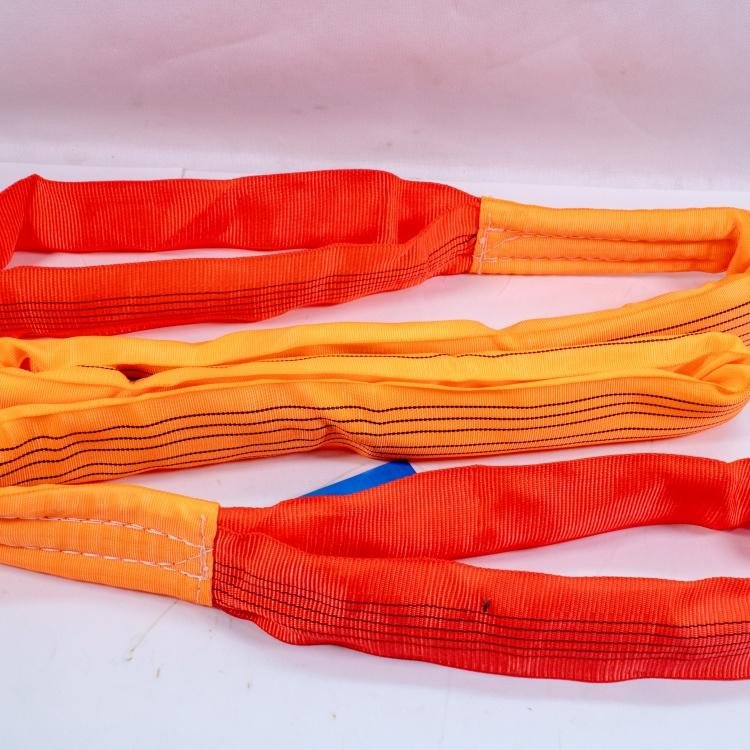
On any construction site, mining operation, or industrial facility across Latin America, the integrity of a lifting sling is the invisible thread that connects the crane hook to a safe lift. Unlike steel chain or wire rope, synthetic flat lifting slings and round slings do not announce their fatigue with audible creaks or visible rust—their warning signs are subtle, often hidden beneath surface fibers, and easily overlooked by busy crews.
Yet the consequences of overlooking these signs are catastrophic. A single unseen cut, a patch of chemical degradation, or a worn stitch pattern can reduce a sling’s breaking strength by 50% or more, turning a routine lift into a life-threatening incident.
This lifting sling inspection checklist provides a comprehensive framework for identifying wear, cuts, and damage in both flat webbing slings (under EN 1492-1) and round slings (under EN 1492-2), with clear discard criteria aligned with ASME B30.9, OSHA 29 CFR 1910.184, and regional LatAm standards including Brazil NR-11, Mexico NOM-151, and Chile NCh 2245.
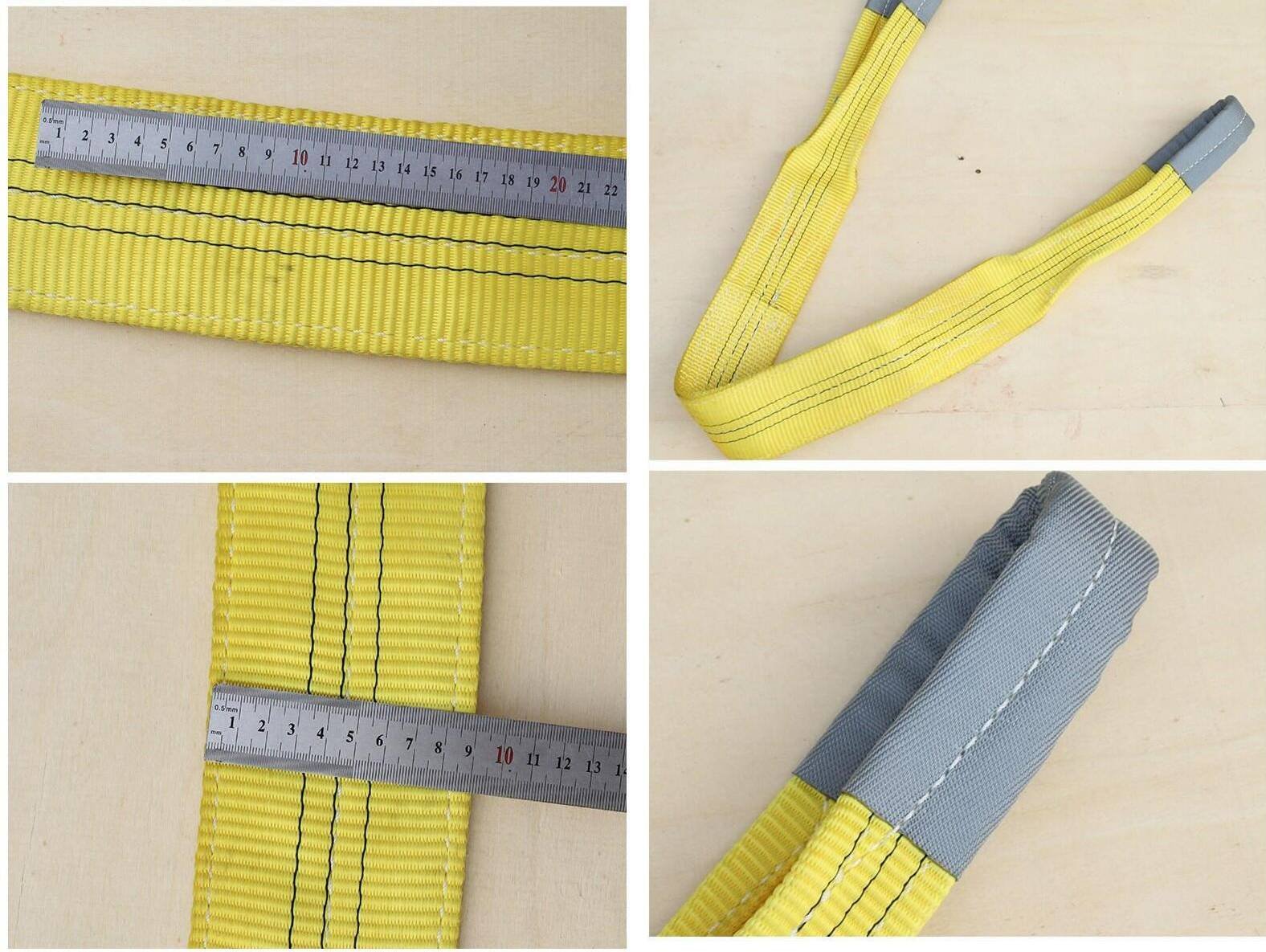
1. The lifting sling Inspection Checklist: Who, When, and How
The Three-Tier Inspection System
Under ASME B30.9 and OSHA 29 CFR 1910.184, inspections are categorized by responsibility, frequency, and depth:
| Inspection Type | Frequency | Performed By | Scope |
|---|---|---|---|
| Pre-Use (Frequent) | Each day or shift before use | Operator / Rigger | Visual check for obvious damage, tag legibility |
| Periodic | Monthly or per project phase | Supervisor / Competent Person | Full visual + tactile inspection, unroll sling completely |
| Annual | At least once per year | Competent Person / 3rd Party | Comprehensive audit with documented records |
OSHA 29 CFR 1910.184(d) requires that “each day before being used, the sling and all fastenings and attachments shall be inspected for damage or defects by a competent person designated by the employer”. Under Brazil NR-11, similar requirements apply, with special attention to “wires, ropes, chains, pulleys, and hooks, which must be checked at all times and defective parts replaced as necessary”.
⚠️ CRITICAL NOTICE: A “competent person” is defined as someone capable of identifying existing and predictable hazards, and who has the authority to take prompt corrective measures. Do not delegate sling inspection to untrained personnel.
Inspection Procedure: The Hands-On Approach
A proper inspection is both visual and tactile. Run gloved hands along the entire length of the sling to detect:
- Internal lumps, bunching, or hardening
- Surface irregularities not visible to the eye
- Localized stiffness indicating heat or chemical damage
For round slings, the outer cover must be periodically removed to inspect the load-bearing core yarns—damage hidden beneath an intact cover is a common cause of sudden failure.
2. Webbing Sling (Flat Lifting Sling) Discard Criteria
A flat lifting sling under EN 1492-1 must be immediately removed from service if any of the following conditions are present. These criteria are aligned with ASME B30.9, OSHA 29 CFR 1910.184(i)(9) , and EN 1492-1:2000+A1:2008.
2.1 Identification and Label Defects
| Condition | Action |
|---|---|
| Missing or illegible capacity tag | Immediate removal |
| Manufacturer ID not visible | Immediate removal |
| WLL markings worn off | Immediate removal |
🔧 MANDATORY PRACTICE: If the identification tag is missing, damaged, or unreadable, the sling must be removed from service immediately. No tag means no lift—regardless of what the color might suggest.
2.2 Cuts, Tears, and Snags
| Damage Type | Discard Threshold | Source |
|---|---|---|
| Edge cut | Length exceeds web thickness | University of Waterloo |
| Face cut or puncture | Any cut that penetrates the load-bearing yarns | OSHA 1910.184(i)(9)(iii) |
| Width reduction (≤100mm sling) | Decrease > 10% at any measured point | EN 1492-1 A.2.7 |
| Width reduction (>100mm sling) | Decrease > 12% at any measured point | EN 1492-1 A.2.7 |
| Snags or punctures | Any snag that separates or breaks fibers | OSHA 1910.184(i)(9)(iii) |
Visual indicators:
- Exposed red core indicator yarns (if equipped)
- Fiber separation or “fuzz” along the load-bearing edges
- Crushed or flattened areas where the web has been compressed
⚠️ CRITICAL NOTICE: Red core yarns are an additional warning of dangerous sling damage. When red yarns are visible, the sling should be removed from service immediately. However, do not wait for red yarns to appear—slings can be dangerously damaged long before these indicators become visible.
2.3 Abrasion and Wear
| Damage Type | Discard Threshold | Source |
|---|---|---|
| Abrasion penetration | Exceeds 15% of webbing thickness (all plies) | University of Waterloo |
| Abrasion on both sides | Sum exceeds 15% of webbing thickness | University of Waterloo |
| Excessive abrasive wear | Any visible thinning or exposed yarns | Certified Slings |
Visual indicators:
- Frayed edges with visible fiber loss
- Thinning of the webbing in localized areas
- Chalky or powdery surface indicating UV degradation
2.4 Warp and Weft Thread Damage
| Damage Type | Discard Threshold | Source |
|---|---|---|
| Warp thread damage (≤50% depth) | Damage extends to within 1/4 of sling width of edge OR exceeds 1/4 of sling width | University of Waterloo |
| Warp thread damage (full depth) | Damage extends to within 1/4 of sling width of edge OR exceeds 1/8 of sling width | University of Waterloo |
| Weft thread damage | Allows warp separation > 1/4 of width AND extends > 2× sling width in length | University of Waterloo |
2.5 Heat, Chemical, and UV Damage
| Damage Type | Discard Threshold | Source |
|---|---|---|
| Melting or charring | Any part of the sling surface | OSHA 1910.184(i)(9)(ii) |
| Acid or caustic burns | Any visible damage | OSHA 1910.184(i)(9)(i) |
| Heat/friction glazing | Glazed, hard, or glass-like surface texture | Mennens |
| UV degradation | Discoloration, brittleness, stiff areas | Liftex |
⚠️ CRITICAL NOTICE: Nylon and polyester are seriously degraded at temperatures above 194°F (90°C). Prolonged exposure to ultraviolet light adversely affects both materials—slings become bleached and stiff when exposed to sunlight or arc welding.
2.6 Stitching and Fitting Defects
| Damage Type | Discard Threshold | Source |
|---|---|---|
| Broken or worn stitches | Any broken stitches in load-bearing splices | OSHA 1910.184(i)(9)(iv) |
| End fitting damage | Pitted, corroded, cracked, bent, twisted, or broken | Certified Slings |
| Knots in sling body | Any knot in any part of the sling | Mazzella |
3. Round Sling Discard Criteria
Round slings under EN 1492-2 have distinct inspection requirements due to their continuous-loop construction and protective outer cover.
3.1 Cover Damage
| Condition | Action |
|---|---|
| Cover torn open, core exposed | Immediate removal |
| Cuts in cover (cross or longitudinal) | Raise serious doubts—remove for competent person examination |
| Substantial localized chafe | View critically—may indicate core damage |
| Cover damage sufficient to expose inner yarns | Immediate replacement required |
3.2 Core Yarn Damage
| Condition | Action |
|---|---|
| Red core indicator visible in any zone | Immediate removal |
| Core yarns cut or broken | Immediate removal |
| Multiple strands with cut fibers | Immediate removal |
🔧 MANDATORY PRACTICE: The cover of a round sling must be removed periodically to inspect the internal core yarns. Damage to the core is not always visible through an intact cover.
3.3 Identification and Fittings
| Condition | Action |
|---|---|
| Rated capacity tag missing or unreadable | Immediate removal |
| Acid or alkali burns | Immediate removal |
| Damaged or deformed fittings | Do not use the assembly |
4. Damage Categories: Understanding What You’re Looking For
Mechanical Damage
Cuts are the most common and dangerous form of mechanical damage. A single cut through the load-bearing edge can reduce a sling’s capacity by 50% or more—regardless of the printed safety factor. Any cut on the face or edge of the webbing that penetrates the load-bearing yarns requires immediate removal.
Abrasion occurs when the sling rubs against rough surfaces, edges, or sharp objects. Signs include frayed edges, thinning of the webbing, or worn-out areas. Abrasion that exceeds 15% of the webbing thickness requires removal.
Snags and punctures occur when the sling catches on protruding objects. Any snag that separates or breaks fibers compromises the structural integrity of the sling.
Chemical Damage
Chemical attack results in local weakening and softening of the material, indicated by flaking of the cover surface which may be plucked or rubbed off.
- Strong alkalis are the primary concern
- Signs include patchy discoloration, brittle crusting, or fibers that crumble into powder
For nylon slings:
- Acids are the primary concern
- Similar visual indicators apply
Thermal Damage
Heat damage is indicated by the fibers taking on a glazed appearance and, in extreme cases, fusion of the fibers.
Sources of thermal damage:
- Weld splatter
- Friction from passing over sharp corners under tension
- Prolonged exposure to temperatures above 90°C (194°F)
Visual indicators:
- Melted or charred surface areas
- Hard, glass-like micro-spots
- Glazed or shiny surface texture
UV Degradation
Prolonged exposure to sunlight or arc welding causes ultraviolet degradation.
Visual indicators:
- Bleached or faded color
- Chalky or powdery surface
- Brittleness and loss of flexibility
- Stiff areas that crack when bent
5. Record Keeping and Compliance
Why Records Matter
Maintaining accurate inspection records is not just best practice—it is a legal requirement across LatAm job sites. Under Brazil NR-11 (Annex 1, Section 1.3) , companies must maintain inspection records in physical or electronic format. After each inspection, an “Inspection Report” must be issued, with annual frequency, prepared by a legally qualified professional.
What to Record
For each sling in your inventory, maintain a log that tracks:
- Serial number and manufacturer identification
- Date of manufacture and initial WLL
- Inspection dates and findings (pre-use, periodic, annual)
- Defect history—any damage observed and action taken
- Retirement date and reason for removal
🔧 MANDATORY PRACTICE: Under ASME B30.9, written records of the most recent periodic inspection shall be maintained. Any sling that has been removed from service should be cut in half to prevent accidental reuse.
6. Storage Best Practices for Longevity
Proper storage extends sling life and reduces inspection findings:
- Store in a well-ventilated, dry location away from direct sunlight
- Hang slings on corrosion-resistant, non-metallic pegs
- Keep clear of ground contact, welding stations, and chemical storage areas
- Protect slings from UV degradation when stored outdoors
- Never store slings near heat sources or in areas with chemical fumes
Conclusion
A rigorous lifting sling inspection checklist is the foundation of any safe rigging operation. By understanding the discard criteria under EN 1492-1 (for flat webbing slings), EN 1492-2 (for round slings), ASME B30.9, and OSHA 29 CFR 1910.184, and by implementing the three-tier inspection system (pre-use, periodic, annual), you can protect your crew, your equipment, and your bottom line.
Remember: any condition that causes doubt as to the strength of the sling is grounds for removal. When in doubt, cut it out—destroy the sling to prevent accidental reuse.
For operations across Latin America, compliance with Brazil NR-11, Mexico NOM-151, and Chile NCh 2245 is essential. Train your personnel, maintain accurate records, and never compromise on safety.
📋 Need a Pre-Shift Inspection Log Template for Your Crew?
Download our LatAm-Compliant Sling Inspection Log (Excel) —includes checklists for flat webbing and round slings, discard criteria quick-reference tables, and automatic retirement warnings. Designed for field crews across Brazil, Mexico, and Chile.