On a Chilean mining site, a maintenance crew needs to tension a conveyor belt in a narrow access corridor. Two hours south, a Mexican fabrication shop lifts 3-ton steel beams from an overhead crane rail day in and day out. These are two fundamentally different lifting problems—and they call for two fundamentally different tools.
Manual chain hoists and lever hoists are both reliable, cost-effective lifting devices that operate without electricity. But choosing the wrong one for the application can mean the difference between a smooth operation and a dangerous, inefficient job site. This guide breaks down the critical differences—from operating mechanisms and load capacities to spatial requirements and safety standards—to help engineers, rigging supervisors, and procurement professionals make the right call. We reference ASME B30.16, ASME B30.21, and touch on relevant LatAm standards including Brazil’s NR-11 and Mexico’s NOM-151 where applicable.
Foundation Standards & Parameter Framework
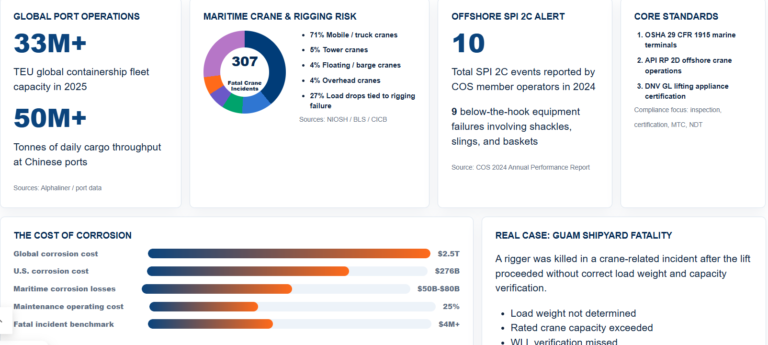
Before comparing the two tools, it is essential to understand the regulatory framework that governs their design, testing, and inspection. Manual chain hoists and lever hoists fall under different ASME volumes with distinct requirements.
Manual chain hoists are covered under ASME B30.16 (Overhead Hoists). This standard applies to hand chain-operated hoists used for vertical lifting and lowering of freely suspended loads. Key provisions include:
- Rated load testing at 125% of WLL before initial use
- Frequent inspection requirements based on service classification
- Mandatory load chain lubrication and wear monitoring
Lever hoists are governed by ASME B30.21 (Lever Hoists), which applies to ratchet-and-pawl and friction brake type lever chain, rope, and web strap hoists used for lifting, pulling, and tensioning applications. Critical requirements include:
- No-load test to prove all hoist functions before initial use
- Load block, chain, and hoist body must be directly in line with the direction of loading to avoid side pull
- Three inspection classifications: Initial, Frequent, and Periodic
European standard EN 13157 covers both hand chain hoists and lever hoists under a unified framework for hand-powered lifting equipment. It specifies safety requirements for design, construction, and testing.
For operations in Latin America, Brazil’s NR-11 (Transporte, Movimentação, Armazenagem e Manuseio de Materiais) establishes that all material handling equipment must be designed and constructed to provide necessary guarantees of strength and safety, and maintained in perfect working condition. Equipment must be used according to manufacturer recommendations and load plans prepared by a legally qualified professional. Mexico’s NOM-151 and Chile’s NCh 2245 impose similar requirements for periodic inspection and load testing of manual hoisting equipment. Operators should confirm that any hoist deployed in the region complies with both the applicable ASME/EN standards and local regulatory frameworks.
Core Functional Differences – Operating Principles & Application Boundaries
Understanding how each tool operates mechanically is the foundation for selecting the right one. The two devices achieve mechanical advantage through entirely different mechanisms, and that difference dictates where each excels.
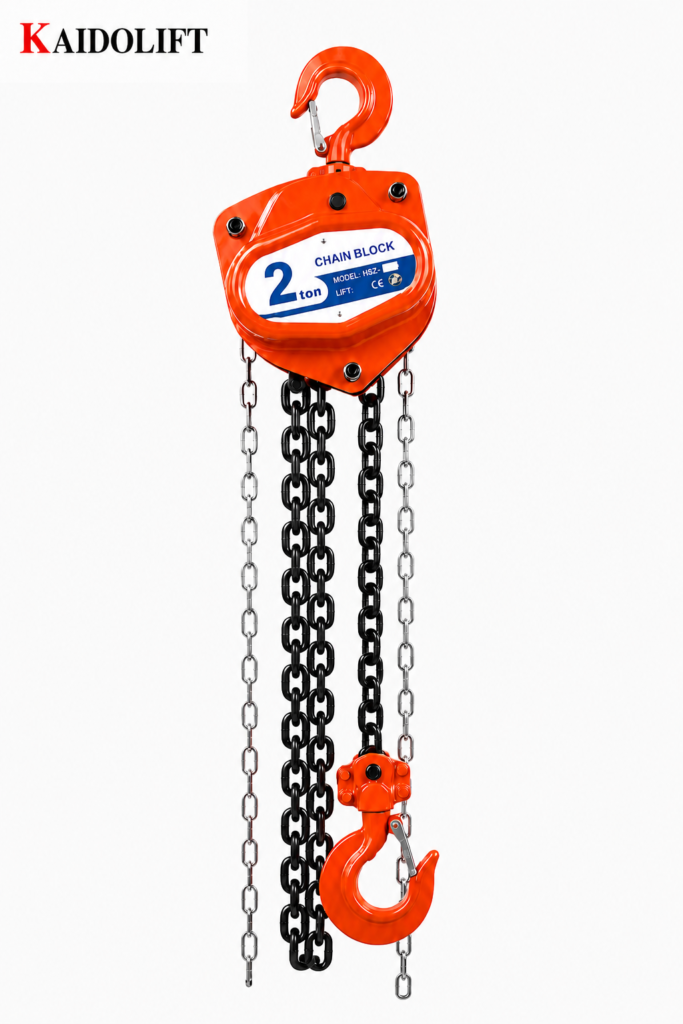
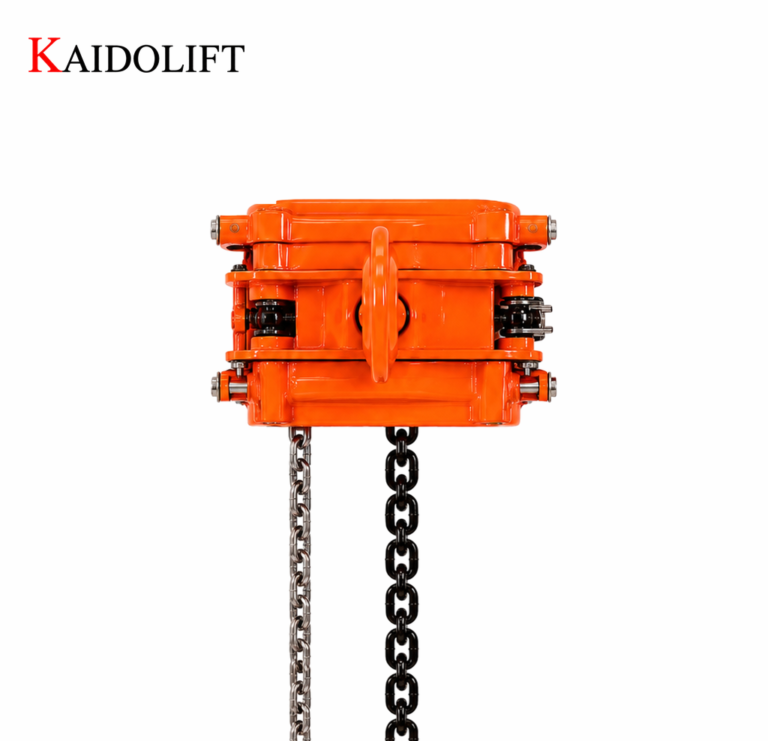
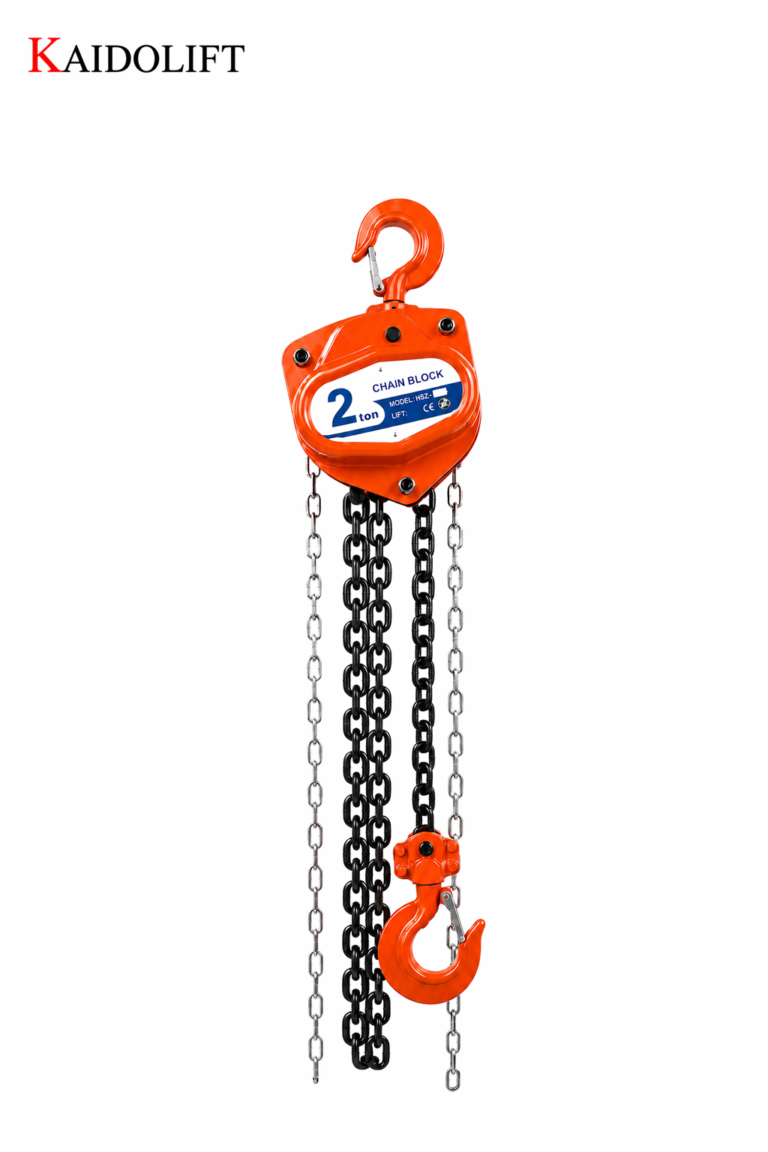
HSZ-A Chain Block | Manual Chain Hoists
HSZ-A Chain Block is a heavy-duty manual chain hoist designed for industrial lifting, equipment installation and material handling. Available from 0.5 ton to 20 tons, with 30 ton and 50 ton heavy-duty options upon request.
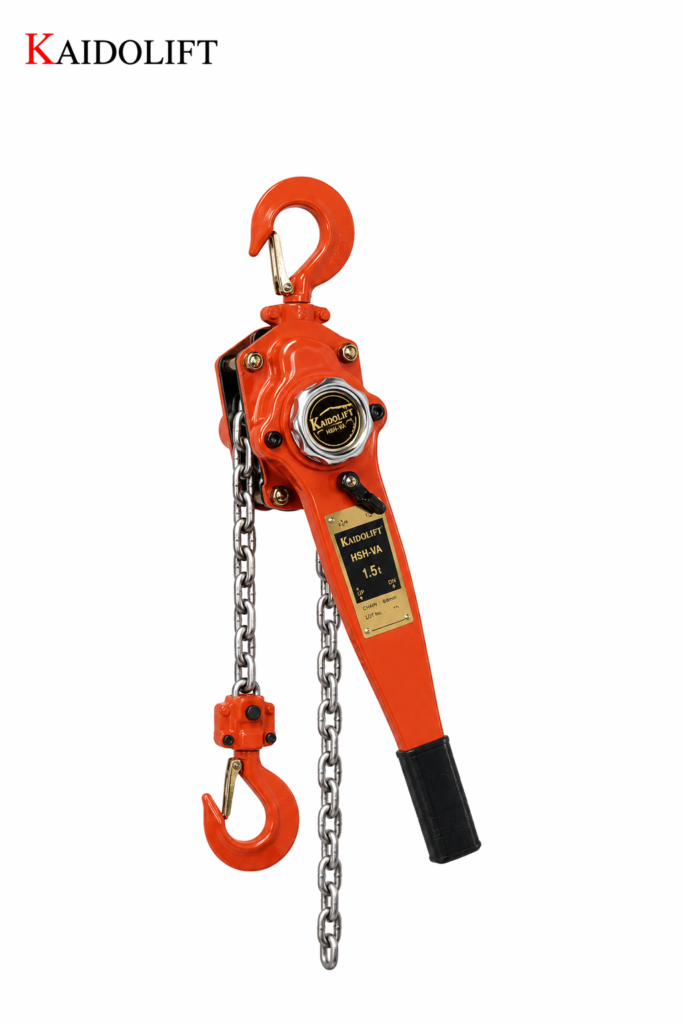
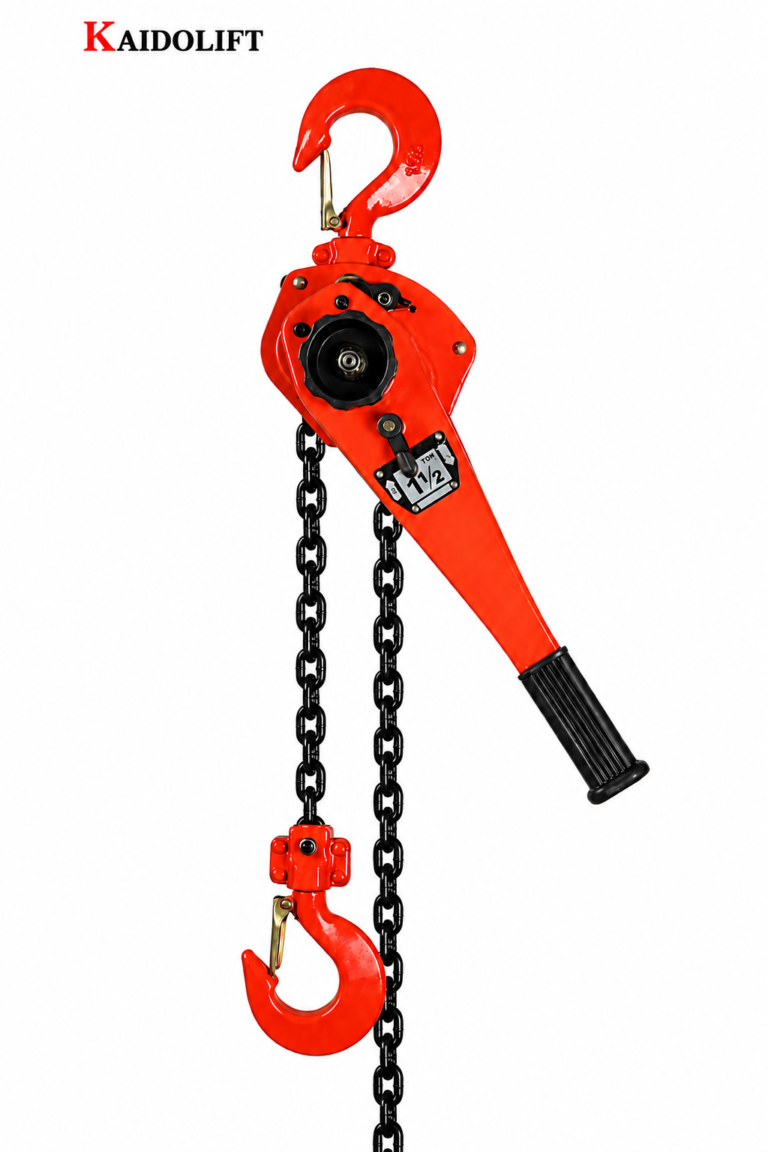
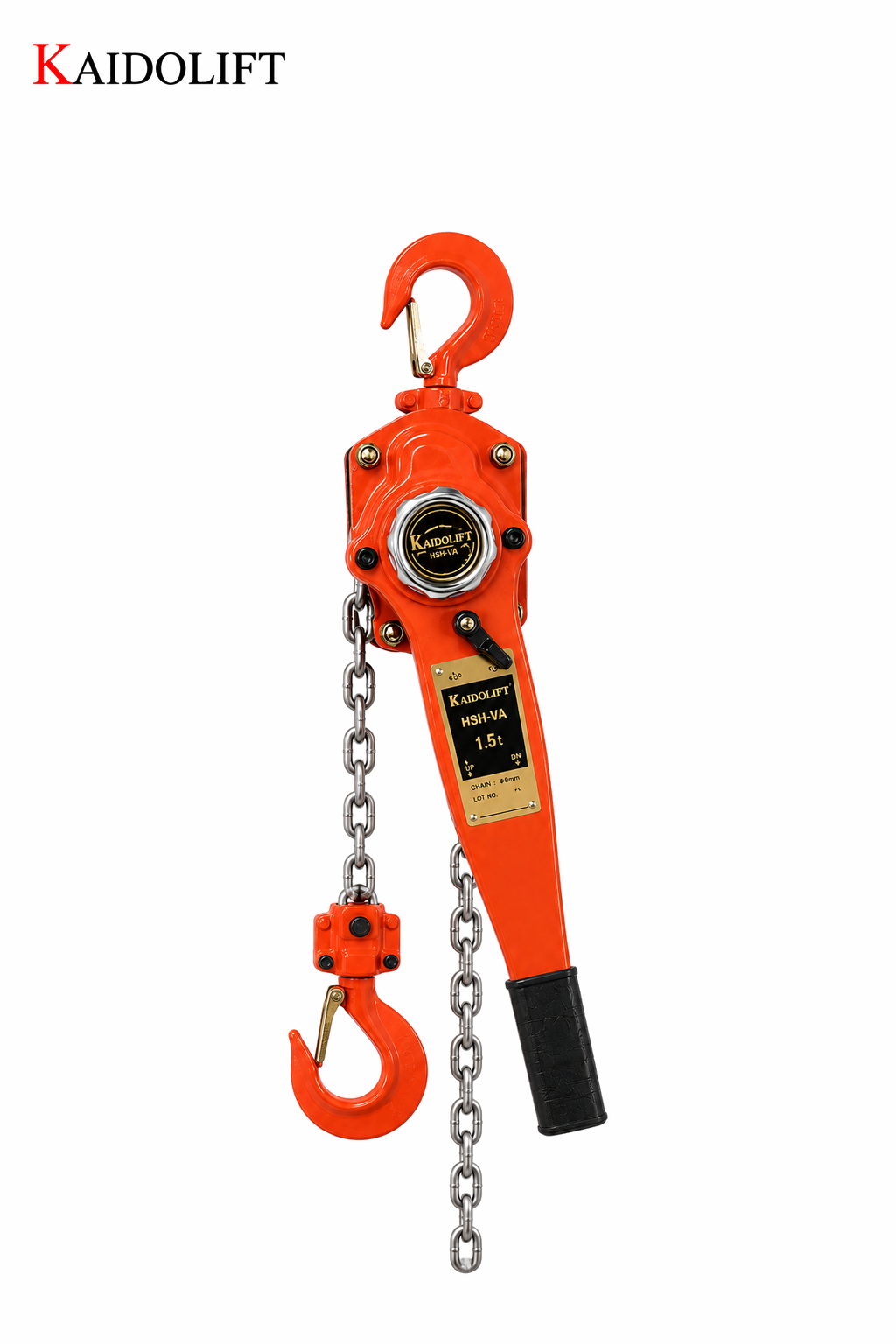
HSH-VA Lever Block Heavy Duty Manual Lever Chain Hoist
Order heavy-duty HSH-VA lever blocks. Features deep-drawn stamped steel housing, short rubber-grip handle, low lever force, and premium alloy chain from 0.75t to 9t. Inquire for pricing!
Manual Chain Hoist – The Vertical Workhorse
A manual chain hoist—also called a chain block or chain fall—uses a hand chain to rotate internal gears, multiplying the applied force through mechanical advantage to lift heavy loads with minimal operator effort. The operator pulls the hand chain in a continuous loop; the gears translate that motion into raising or lowering the load hook.
Core characteristics:
- Load direction: Vertical lifting and lowering only. The tool is designed for loads suspended from a fixed overhead point
- Capacity range: Typically 0.25 ton to 50 tons, with common industrial models ranging from 0.5 ton to 20 tons
- Headroom requirement: Taller profile requires more vertical clearance above the load
- Portability: Bulkier and heavier; better suited to fixed or semi-permanent lifting stations
- Operator position: Can operate from a distance, away from the load path
- Lifting speed: Steady and controlled; ideal for repetitive lifts
Primary applications:
- Overhead lifting of machinery during installation or servicing
- Workshop and warehouse lifting from fixed beams or trolleys
- Repetitive vertical lifting tasks where the load point does not change
- Environments without reliable electrical power
⚠️ CRITICAL NOTICE: A manual chain hoist is not designed for horizontal pulling or angled tensioning. Using a chain hoist to pull a load sideways introduces side loading that can damage internal gears and cause catastrophic failure. For any non-vertical force application, select a lever hoist instead.
Lever Hoist – The Versatile Puller
A lever hoist—often called a lever block, ratchet lever hoist, or come-along—uses a ratcheting handle that the operator pumps back and forth. The lever operates a ratchet-and-pawl system that rotates the load wheel, moving the Grade 80 load chain incrementally with each stroke. A self-sustaining mechanical brake holds the chain in position whenever the lever is released.
Core characteristics:
- Load direction: Multi-directional—vertical, horizontal, angled, or any orientation
- Capacity range: Typically 0.25 ton to 9 tons, with heavy-duty models up to 50 tons in specialized configurations
- Headroom requirement: Compact body requires minimal clearance
- Portability: Smaller, lighter frame—ideal for field deployment and job-site mobility
- Operator position: Must stand closer to the load to operate the lever
- Precision: Ratchet system allows incremental adjustments for fine positioning
Primary applications:
- Tensioning steelwork, cables, or rigging on construction projects
- Pulling equipment into alignment during installation
- Lifting or lowering in confined or awkward locations
- Utility and telecom work requiring controlled pulling
- Pipe positioning and structural steel alignment
- Load tensioning for secure transport
🔧 MANDATORY PRACTICE: A lever hoist can lift vertically when correctly rated and anchored, but it is most often chosen when the job also requires pulling, positioning, or working in confined spaces. Never exceed the rated WLL, and always confirm the anchor point can withstand the full applied force—including any mechanical advantage multiplication.
Application-Driven Selection – Matching the Tool to the Job
The decision between a lever hoist and a manual chain hoist is not about which tool is “better”—it is about which tool is right for the specific job. The two devices are complementary rather than competitive.
Selection Decision Matrix
| Decision Factor | Choose Manual Chain Hoist | Choose Lever Hoist |
|---|---|---|
| Load direction | Strictly vertical lifting | Vertical, horizontal, angled, or tensioning |
| Load weight | Heavy to very heavy (1–50+ tons) | Light to medium (0.25–9 tons typical) |
| Workspace | Open overhead with ample headroom | Tight spaces, low clearance, confined areas |
| Usage pattern | Frequent, repetitive lifts at fixed station | Intermittent, mobile, field deployment |
| Precision need | Standard lift/lower control | Fine incremental positioning |
| Primary task | Raise/lower suspended loads | Pull, tension, position, or align |
| Portability | Not a priority—stays in one place | Critical—moves between job sites |
LatAm Application Scenarios
Brazil – Mining and Port Operations: In Brazilian iron ore ports, manual chain hoists are the go-to for lifting heavy conveyor components from fixed gantries during scheduled maintenance. NR-11 requires that all such equipment be maintained in perfect working condition with documented inspection records. For tensioning conveyor belts or pulling idlers into alignment during unscheduled repairs, lever hoists provide the multi-directional capability that chain hoists cannot offer.
Mexico – Manufacturing and Assembly: Fabrication shops in Monterrey and Querétaro rely on manual chain hoists for repetitive vertical lifting of steel beams and fabricated components from overhead crane rails. When the same shop needs to pull structural members into alignment for welding or position equipment in tight assembly jigs, lever hoists take over. NOM-151 requires load testing and certification documentation for both types.
Chile – Mining and Construction: In Chilean copper mines, maintenance crews frequently work in confined spaces with limited overhead clearance. Lever hoists are preferred for their compact profile and ability to pull or lift at angles—critical when working around conveyors, crushers, and processing equipment. NCh 2245 mandates periodic inspection intervals based on service severity.
CRITICAL RULE: Never use a lever hoist as a permanent lifting solution for repetitive daily vertical lifts. The ratchet mechanism is not designed for the duty cycle of a chain hoist, and premature wear will lead to brake failure. Conversely, never use a chain hoist for horizontal pulling—the gear train is not designed for side loading, and failure can occur without warning.
Mechanical Advantage Considerations
The lever hoist’s mechanical advantage comes primarily from lever length—the longer the lever, the more leverage, but shorter levers benefit riggers working in confined spaces. Some lever hoist designs incorporate both a lever and internal gears, providing two mechanical advantages simultaneously.
For manual chain hoists, the gear ratio determines the mechanical advantage. A higher gear ratio means less hand chain pull force required but more chain pulled per lift cycle. Operators should consider operator fatigue for high-frequency applications—chain hoists generally offer lower operator effort for equivalent loads.
Inspection & Maintenance Implications
Manual chain hoists (ASME B30.16) require:
- Frequent visual inspection: monthly (normal), weekly-to-monthly (heavy), daily-to-weekly (severe)
- Periodic documented inspection: yearly (normal), semiannually (heavy), quarterly (severe)
Lever hoists (ASME B30.21) follow similar inspection intervals with additional requirements for the ratchet-and-pawl mechanism and brake system. Hoists idle for one month or more must be inspected before returning to service.
Conclusion & Summary
Manual chain hoists and lever hoists are not interchangeable—they serve distinct roles in the lifting and rigging ecosystem.
| Tool | Best For | Avoid Using For |
|---|---|---|
| Manual Chain Hoist | Heavy vertical lifts, fixed stations, repetitive duty | Horizontal pulling, angled loads, tight spaces |
| Lever Hoist | Multi-directional pulling, tensioning, confined spaces, field work | High-duty-cycle vertical lifting, very heavy loads |
Key takeaways:
- Manual chain hoists (ASME B30.16) are vertical workhorses for heavy, repetitive lifts
- Lever hoists (ASME B30.21) are versatile pullers for multi-directional force application
- The two tools complement each other—many rigging crews carry both
- Selection depends on load direction, weight, workspace, usage pattern, and precision needs
- Both must comply with applicable ASME/EN standards and LatAm regulations including NR-11, NOM-151, and NCh 2245
- Never substitute one for the other outside its designed application envelope