In workshops, construction sites, and industrial facilities across Latin America—from the manufacturing plants of Mexico to the mining operations of Chile and the shipyards of Brazil—the manual chain hoist remains an indispensable tool. Among the many models available, the HS-VL manual chain hoist has emerged as a distinct upgrade over conventional chain blocks, offering enhanced safety, superior engineering, and improved operator experience.
But what exactly sets the HS-VL apart from a standard chain block? This guide provides a comprehensive comparison between the HS-VL manual chain hoist and conventional chain blocks, examining design philosophy, braking systems, material quality, performance characteristics, and application suitability. We will also address key safety standards including ASME B30.16, EN 13157, and regional LatAm requirements such as Brazil NR-11, Mexico NOM-151, and Chile NCh 2245.
1. Understanding the Two Types
What Is a Standard Chain Block?
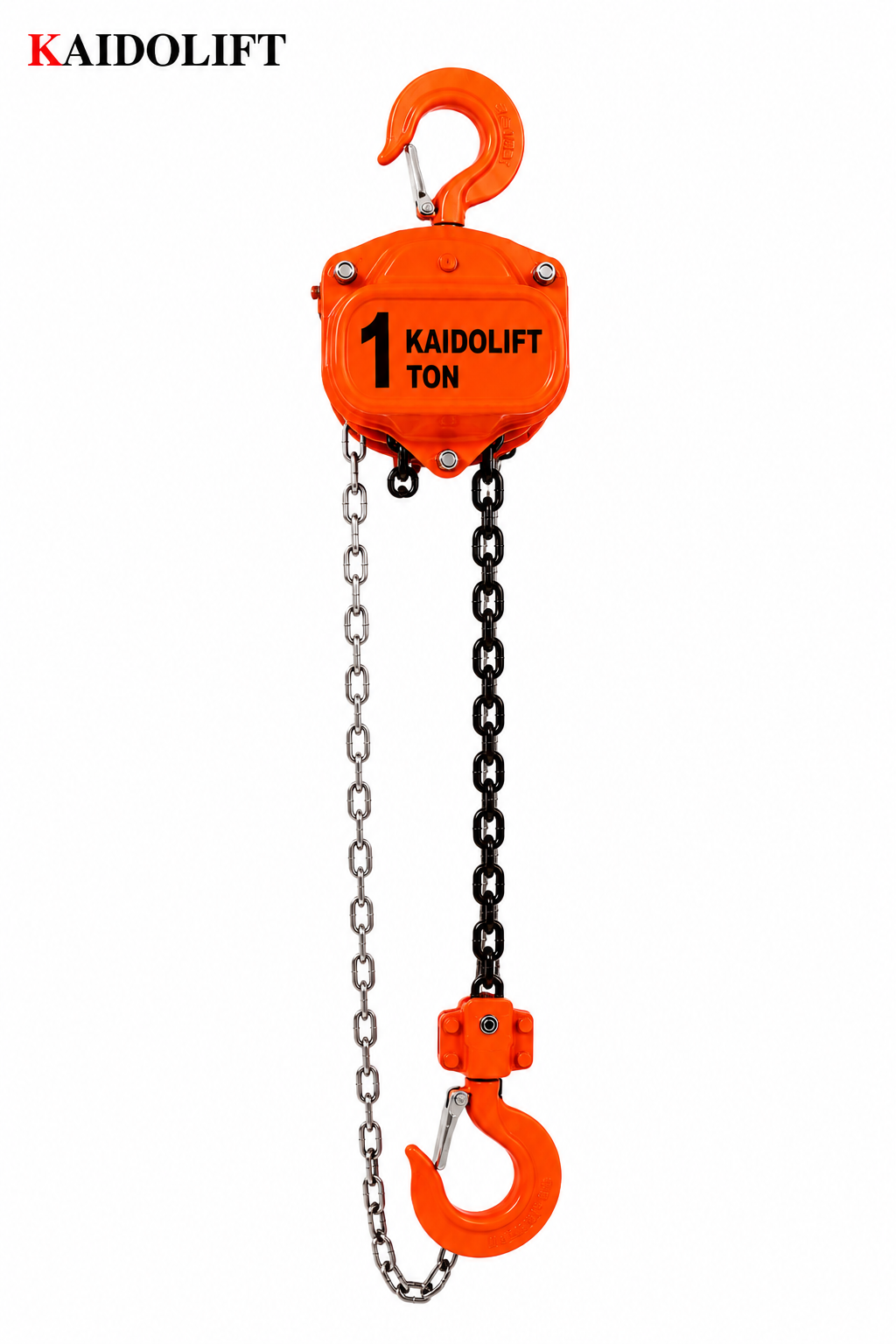
A standard chain block—also referred to as a conventional manual chain hoist—is a portable lifting device operated by pulling a hand chain. It uses a gear train to provide mechanical advantage, allowing a relatively small pulling force to lift heavy loads. Models such as the widely recognized HSZ-A represent the entry-level tier of manual chain hoists.
Key characteristics:
- Basic gear train design
- Standard single-pawl or basic double-pawl braking systems
- Economical construction
- Suitable for daily or small lifting tasks
- Lower initial cost
- Wide availability
What Is the HS-VL Manual Chain Hoist?
The HS-VL manual chain hoist represents a more advanced category of manual chain hoist. Engineered with Japanese technology, it is designed for demanding industrial environments where safety, durability, and operator efficiency are paramount. The HS-VL is available in capacities from 0.5 tons up to 50 tons, with standard lift heights typically ranging from 2.5 to 3 meters.
Key characteristics:
- Japanese-engineered design and technology
- Automatic double-pawl braking system
- High-grade alloy steel load chain
- Heat-treated forged hooks
- Optional load limiter for overload protection
- Integral bearing design for smoother operation
- Enhanced durability and longer service life
2. Core Design Differences
Housing and Construction
| Feature | Standard Chain Block (e.g., HSZ-A) | HS-VL Manual Chain Hoist |
|---|---|---|
| Housing Design | Basic sheet metal or cast construction | Integral, reinforced housing with卷边加强筋 design for enhanced strength |
| Construction Quality | Economical, basic performance tier | Premium, engineered for demanding environments |
| Durability | Adequate for light to medium use | Enhanced for heavy-duty, frequent use |
The HS-VL features a rolled edge reinforcement design on the housing, which significantly increases overall机身强度 (body strength) compared to conventional models. This reinforcement provides better protection for internal components and extends the hoist’s service life in demanding applications.
Bearing and Gear Train
| Feature | Standard Chain Block | HS-VL Manual Chain Hoist |
|---|---|---|
| Bearing Type | Basic bushings or plain bearings | Integral bearings in load sprocket |
| Mechanical Efficiency | Standard | Higher—reduced hand pulling force |
| Gear Material | Standard alloy steel | 20CrMnTi alloy steel with strict carburizing heat treatment |
| Gear Wear Resistance | Standard | Enhanced through advanced heat treatment |
The HS-VL incorporates integral bearings in the load sprocket, which significantly reduces the hand force required to lift the rated load. This design improvement translates directly to reduced operator fatigue during extended use. Additionally, the internal transmission components are made from 20CrMnTi alloy steel with strict carburizing heat treatment, which increases gear wear resistance and longevity compared to conventional manufacturing processes.
3. Safety Systems: The Critical Difference
Braking System Comparison
The most significant difference between the HS-VL and standard chain blocks lies in the braking system.
| Feature | Standard Chain Block | HS-VL Manual Chain Hoist |
|---|---|---|
| Brake Type | Single pawl or basic double pawl | Automatic double-pawl braking system |
| Safety Redundancy | Limited | Dual-pawl design provides redundant safety |
| Brake Reliability | Standard | Enhanced—if one pawl fails, the other maintains brake function |
| Load Holding | Basic | Superior—instant engagement when pulling stops |
The HS-VL’s automatic double-pawl braking system is a key differentiator. Unlike conventional hoists that may use a single pawl or a basic braking mechanism, the HS-VL’s dual-pawl design provides redundant safety: if one ratchet pawl fails, the other still maintains its mechanical brake function. This redundancy is critical in preventing unintended load descent—a leading cause of hoist-related accidents.
The system also features double guide rollers that enhance performance, safety, and reliability. The unique curling design enables the hand chain to feed directly into the wheel sprocket from multiple directions and angles, reducing the risk of jamming.
Weston-Style Double Pawl Brake
Many premium manual chain hoists, including the HS-VL series, utilize a Weston-style double pawl brake system. This design incorporates:
- Dual pawls that engage with the ratchet wheel
- Automatic engagement when hand chain pulling stops
- Controlled descent when lowering the load
- Enhanced strength through the double-pawl design
Optional Load Limiter
The HS-VL offers an optional load limiter that provides additional safety by preventing the hoist from lifting loads exceeding its rated capacity. This feature is particularly valuable in environments where operators may be tempted to overload equipment. When the load exceeds the preset limit, the load limiter activates and prevents further lifting, protecting both the hoist and the operator.
Hook Design and Safety
| Feature | Standard Chain Block | HS-VL Manual Chain Hoist |
|---|---|---|
| Hook Material | Standard forged steel | Heat-treated forged alloy steel |
| Hook Strength | Standard | Enhanced through forging and heat treatment |
| Safety Latches | Often basic or absent | Forged steel safety latches standard |
| Overload Indicators | Rare | Some models feature stretch indicators |
The HS-VL’s hooks undergo forging and professional heat treatment, resulting in high strength and long service life. The hooks are fitted with forged steel safety latches to prevent the load from accidentally disengaging. Some HS-VL models also feature stretch indicators on the hooks: if the hook is overloaded, it will gradually begin to straighten rather than breaking suddenly, providing a visual warning and avoiding sudden load drops.
4. Material Quality and Chain Specifications
Load Chain
| Feature | Standard Chain Block | HS-VL Manual Chain Hoist |
|---|---|---|
| Chain Material | Standard alloy steel | High-grade alloy steel |
| Chain Grade | Often G80 or equivalent | G80 or higher |
| Chain Durability | Standard | Enhanced—resists wear in tough environments |
| Chain Diameter | Varies by capacity | Precision-matched to capacity |
The HS-VL utilizes high-grade alloy steel chains that resist wear in tough environments. The galvanized hand chain (hand zipper strip) provides additional corrosion resistance. The load chain specifications are precisely matched to the hoist’s capacity, with diameters ranging from 5mm for 0.5T models up to 9mm for heavier capacities.
Chain Falls (Strands)
The number of load chain falls (strands) increases with capacity to distribute the load effectively:
| Capacity | Number of Falls |
|---|---|
| 0.5T – 2T | 1 fall |
| 3T – 5T | 2 falls |
| 10T | 4 falls |
| 20T | 8 falls |
| 30T | 12 falls |
| 50T | 20 falls |
5. Performance and Operator Experience
Hand Chain Pull Force
| Feature | Standard Chain Block | HS-VL Manual Chain Hoist |
|---|---|---|
| Pulling Force | Standard—varies by model | Reduced—easier operation |
| Mechanical Efficiency | Standard | Higher—integral bearings reduce friction |
| Operator Fatigue | Moderate | Reduced—less effort required |
The HS-VL’s higher mechanical efficiency translates to less physical effort required from the operator. This is achieved through:
- Integral bearings in the load sprocket reducing friction
- Precision-machined gears with higher efficiency
- Optimized gear transmission and speed ratio
For operators using hoists frequently throughout the day, this reduced effort significantly decreases fatigue and improves productivity.
Smooth Operation
The HS-VL features double guide rollers that enhance performance by ensuring the hand chain feeds smoothly into the sprocket from multiple directions and angles. This design reduces the risk of jamming—a common frustration with standard chain blocks—and provides smoother operation overall.
6. Application Suitability
Standard Chain Block: Best For
Standard chain blocks, such as the HSZ-A series, are suitable for:
- General-purpose lifting in factories and workshops
- Light to medium loads (typically up to 10-20 tons)
- Occasional use where cost is the primary consideration
- Basic lifting tasks with standard performance requirements
HS-VL Manual Chain Hoist: Best For
The HS-VL manual chain hoist is ideal for:
- Demanding industrial environments where safety and reliability are paramount
- Heavy-duty applications up to 50 tons
- Frequent use where operator fatigue is a concern
- Construction sites requiring rugged, durable equipment
- Mining operations where equipment must withstand harsh conditions
- Shipbuilding and maritime applications requiring corrosion-resistant options
- Applications requiring enhanced safety features (dual-pawl brake, load limiter)
- Facilities with limited power access where manual operation is essential
7. Standards and Regional Compliance
International Standards
Both standard chain blocks and HS-VL hoists should comply with:
| Standard | Scope |
|---|---|
| ASME B30.16 | Underhung and Overhead Hand Chain Hoists |
| EN 13157 | Safety of manually controlled load lifting equipment |
| ISO 9001 | Quality management systems |
| CE Marking | EU regulatory compliance (where applicable) |
ASME B30.16 requires that each hoist be marked with the manufacturer’s name, rated load capacity, and model number. Hoists must be inspected before each use and periodically, with damaged hoists removed from service immediately.
Regional Standards: Latin America
| Region | Standard | Key Requirements |
|---|---|---|
| Brazil | NR-11 (Annex 1) | Equipment must provide safety guarantees; operators must receive documented training; inspection records must be maintained |
| Mexico | NOM-151-SSA1 | Safety requirements for lifting equipment |
| Chile | NCh 2245 | Technical specifications for industrial lifting equipment |
⚠️ CRITICAL NOTICE: Under NR-11, all material handling equipment must be kept in perfect working condition. Employers are responsible for ensuring operators are trained and qualified, and that equipment is regularly inspected and maintained.
8. Inspection and Maintenance Considerations
Pre-Use Inspection (Both Types)
- Inspect for visible damage: cracks, deformations, corrosion
- Check load chain for elongation, wear, or damage
- Verify hand chain is free from kinks or damage
- Test the brake system—the hoist must hold the load when pulling stops
- Ensure hooks are not bent, stretched, or cracked
- Verify safety latches are functional
- Check labels and markings are legible
Periodic Inspection
- Monthly: Lubricate chains and gears; inspect for wear; check brake system
- Annual: Comprehensive inspection by qualified personnel; load test (typically 125% of rated capacity); document all findings
🔧 MANDATORY PRACTICE: The load chain should be measured periodically for elongation. If the chain has stretched more than 3% of its original length, it must be replaced immediately.
9. Summary Comparison Table
| Feature | Standard Chain Block (e.g., HSZ-A) | HS-VL Manual Chain Hoist |
|---|---|---|
| Design Origin | Generic / Economical | Japanese-engineered |
| Braking System | Basic single or double pawl | Automatic double-pawl with redundancy |
| Safety Redundancy | Limited | Dual-pawl backup—if one fails, the other holds |
| Load Limiter | Rare | Optional—prevents overloading |
| Bearings | Basic bushings | Integral bearings—reduces pulling force |
| Chain Quality | Standard alloy steel | High-grade alloy steel—wear-resistant |
| Hook Treatment | Standard forging | Heat-treated forged alloy—enhanced strength |
| Housing Strength | Standard | Reinforced with design |
| Gear Material | Standard alloy | 20CrMnTi alloy with carburizing treatment |
| Mechanical Efficiency | Standard | Higher—reduced operator effort |
| Operator Fatigue | Moderate | Reduced |
| Typical Capacity Range | 0.25T – 30T | 0.5T – 50T |
| Cost | Lower | Higher (premium positioning) |
| Best For | Daily/small lifting, cost-sensitive applications | Demanding environments, heavy-duty, frequent use |
Conclusion
The choice between a standard chain block and an HS-VL manual chain hoist ultimately depends on the specific requirements of your operation.
Choose a standard chain block when:
- Budget is the primary constraint
- Lifting tasks are light to moderate and infrequent
- Basic performance is sufficient for the application
Choose the HS-VL manual chain hoist when:
- Safety is paramount—the dual-pawl braking system provides redundancy
- Operators will use the hoist frequently—reduced pulling force minimizes fatigue
- The operating environment is demanding—construction, mining, shipbuilding
- Loads are heavy—capacities up to 50 tons are available
- Long-term durability is important—reinforced housing and heat-treated components extend service life
- Overload protection is desired—the optional load limiter adds a critical safety layer
For operations across Latin America, compliance with ASME B30.16, EN 13157, and regional standards such as Brazil NR-11, Mexico NOM-151, and Chile NCh 2245 is essential. The HS-VL’s enhanced safety features and robust construction make it a compelling choice for operations where the cost of failure is high—and where the value of operator safety and equipment reliability cannot be overstated.
📋 Need Help Choosing Between Chain Hoist Models for Your Operation?
Our material handling team provides free, no-obligation hoist selection assistance for industrial operations across Latin America. We can help you:
- Compare HS-VL vs standard chain block options for your specific application
- Verify ASME B30.16 and EN 13157 compliance
- Source hoists with load limiters or other safety features
- Provide inspection checklists and operator training guidance
[Request Hoist Selection Assistance Now] or download our LatAm-Compliant Manual Chain Hoist Comparison Guide (PDF) with full specification tables and selection matrices.