Lifting slings and rigging hardware connect a load to a crane hook. They are used in warehousing, ports, construction, manufacturing, and cross-border equipment trade. The terminology shifts from one country to another. The applicable safety standards shift too. This guide walks through the main product categories. It then compares regional naming conventions. It finishes with a country-by-country standards reference. The goal is to give sourcing and selling teams a single map they can use across markets.
1. Main Product Categories and Their Functions
1.1 Wire Rope Sling
A wire rope sling is made from steel wire rope. Its ends are fitted with thimbles or pressed ferrules. These fittings form an eye for hooking. Wire rope slings have high breaking strength. They resist abrasion well. They are the standard choice for heavy steel coils, large machinery, and dies. And They are less flexible than textile slings. They also need regular inspection for broken wires and corrosion.
1.2 Webbing Sling
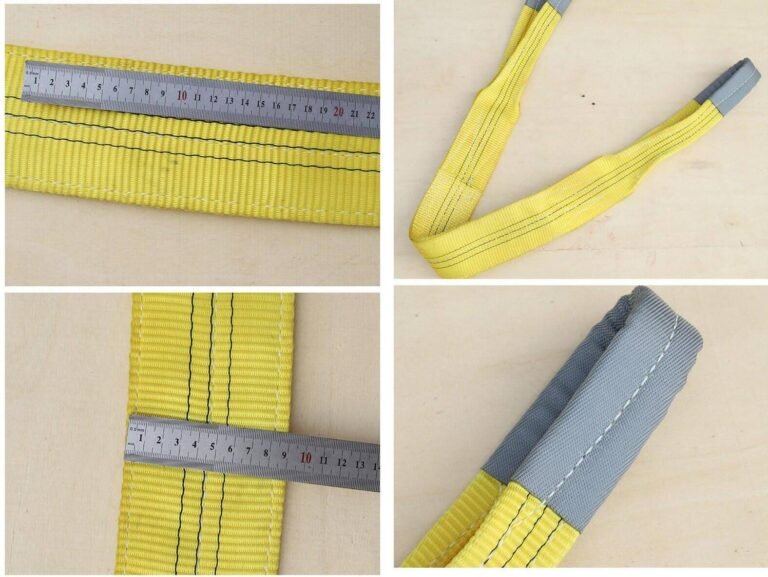
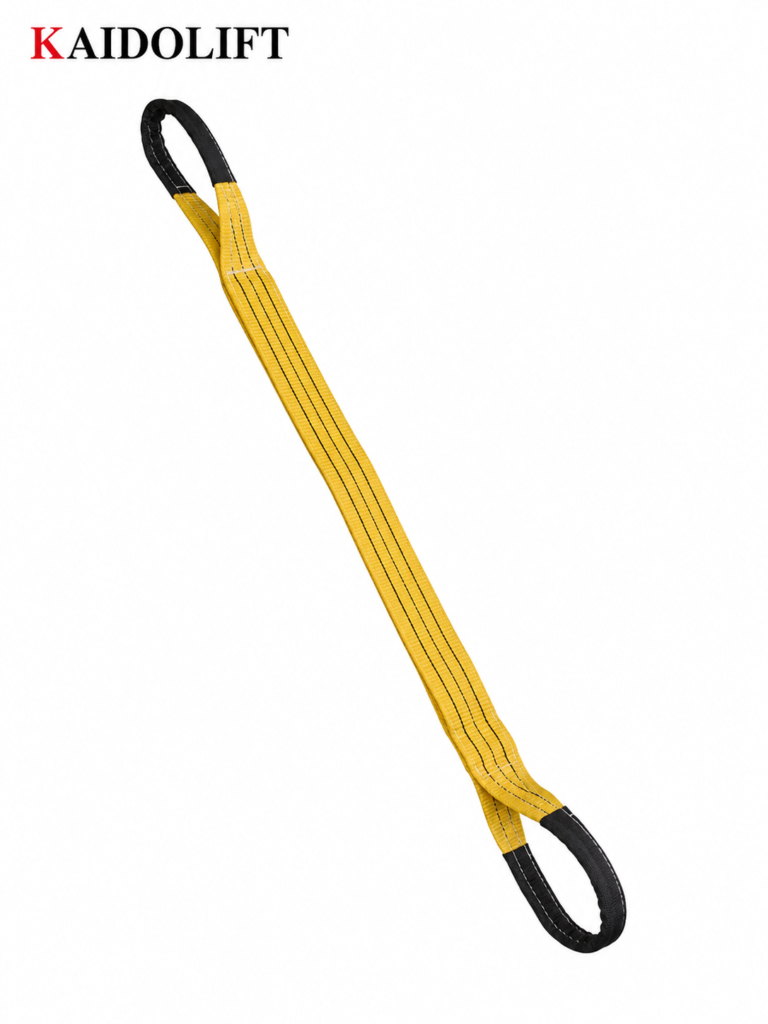
A webbing sling is woven from flat polyester yarn. The material is soft against the load. It will not scratch painted or polished surfaces. Manufacturers color-code webbing slings by rated capacity. This makes visual inspection faster on a busy floor. Webbing slings are common in general logistics. They suit light to medium loads. They are not ideal for sharp edges or very high temperatures.
1.3 Round Sling
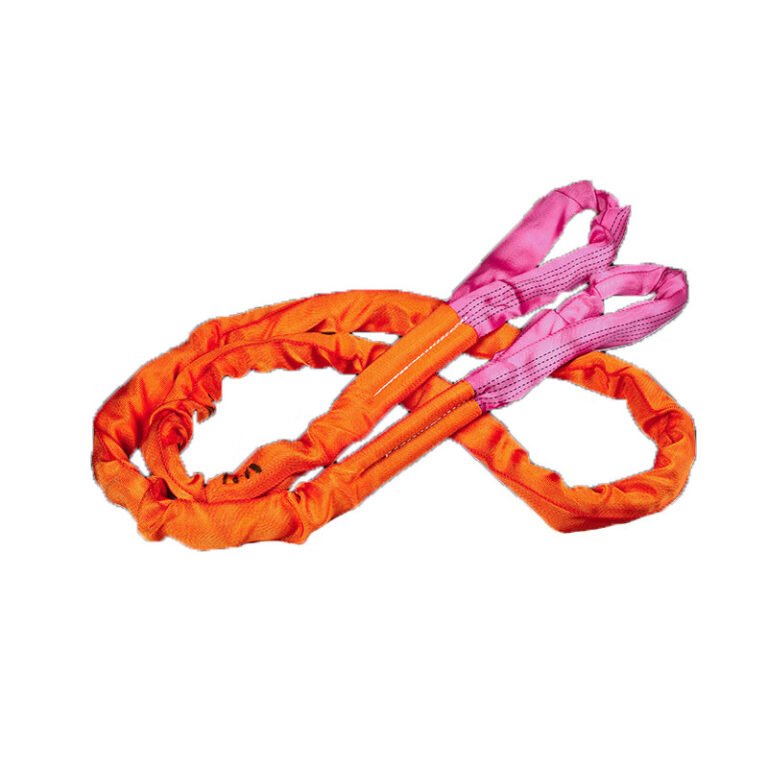
A round sling has a continuous fiber core. The core sits inside a tubular protective cover. This construction spreads load evenly across the sling body. It has no stitched seams along its length to wear through. Round slings work well on irregular shapes. Wind turbine blades, pipes, and curved steel parts are typical loads. They also conform closely to the surface they wrap.
1.4 Chain Sling
A chain sling is assembled from alloy steel chain links. The chain is rated by grade, most often Grade 80 or Grade 100. Chain slings tolerate high heat. They resist cuts and abrasion better than fiber slings. Foundries, steel mills, and forging plants rely on them. They are heavier to handle than webbing or wire rope of similar capacity. They also cost more upfront.
1.5 Shackle
A shackle is the metal connector between a sling and a lifting point. Two shapes dominate the market. A bow shackle has a rounded body for multi-directional pull. A dee shackle, or D-shackle, has a narrower body for inline pull. Shackles let riggers assemble and disassemble a lift quickly. They must be matched in rated capacity to the rest of the rigging.
1.6 Lifting Hook
A lifting hook sits at the working end of a sling or chain. Self-locking hooks prevent accidental load slip-off. Latch hooks use a spring-loaded safety latch instead. Hook design affects both speed and safety on site. A worn or deformed hook is a common cause of rigging failure. Regular visual checks are required wherever hooks are in service.
1.7 Rigging Hardware Accessories
This category covers thimbles, master links, swivels, and turnbuckles. These parts assemble or extend wire rope and chain slings. They also help with tensioning and alignment. The material grade and machining precision of each part affect the rated capacity of the whole assembly. A weak accessory can lower the safe working load of an otherwise strong sling.
2. Regional Naming Conventions Across Markets
2.1 English-Speaking Markets (US, EU, Southeast Asia Cross-Border Platforms)
The umbrella term in English is Rigging Hardware. Lifting Sling is also used as a general category word. The specific product names map directly to the categories above. These are Wire Rope Sling, Chain Sling, Webbing Sling, Round Sling, Shackle, and Lifting Hook. Listings on Amazon, eBay, and B2B platforms generally follow this naming pattern.
2.2 Russian Market (Ozon and Similar Platforms)
The Russian core word is “строп” (strop). It corresponds to “sling” in English. Specific terms add a material qualifier. “Строп канатный” means wire rope sling. And “Строп цепной” means chain sling. “Строп текстильный” means textile or webbing sling. The broader accessory category is often called “такелажная оснастка,” which translates to rigging hardware.
2.3 Latin American Market (Mercado Libre, Spanish-Speaking Countries)
The Spanish core word is “eslinga.” It is the direct equivalent of “sling.” Specific terms follow a similar pattern to Russian. “Eslinga de cable de acero” means wire rope sling. And “Eslinga de cadena” means chain sling. “Eslinga textil” means webbing sling. A shackle is called “grillete.” A hook is called “gancho.”
2.4 Brazilian Market (Portuguese)
Portuguese listings often use “cinta de elevação” or simply “linga” for sling products. Wire rope is “cabo de aço.” A chain sling is “corrente de elevação.” Brazilian sellers sometimes mix in English terms for technical specifications, especially load ratings.
2.5 Chinese Market (1688 Sourcing and Domestic Trade)
The Chinese industry term is “吊索具,” sometimes shortened to “起重索具.” Specific products map to the same categories used internationally. These include 钢丝绳吊索 (wire rope sling), 合成纤维吊装带 (webbing sling, also called 尼龙吊带), 圆形吊装带 (round sling), 链条吊索 or 起重链条 (chain sling), 卸扣 (shackle), and 吊钩 (lifting hook).
3. Standards by Country and Region
3.1 United States (ASME and OSHA)
ASME B30.9 is the core standard for slings in the US. It covers fabrication, attachment, use, inspection, testing, and maintenance. It applies to alloy chain, wire rope, metal mesh, and synthetic slings. ASME B30.26 covers detachable rigging hardware separately. This includes shackles, master links, and similar fittings. OSHA 1910.184 is the regulatory backbone for sling safety in US workplaces. It requires periodic inspection and documented records.
3.2 European Union (EN Standards and CE Marking)
EN 13414 sets design and testing requirements for wire rope slings. And EN 818 is a multi-part series covering chain slings. In addtion EN 1492 covers textile slings, including flat webbing and round slings. Sling components like hooks and shackles fall under EN 1677 and EN 13889 respectively. Any product sold into the EU market must also meet the Machinery Directive. CE marking is required as proof of that compliance.
3.3 China (GB/T National Standards)
GB/T 39480 governs the use and maintenance of wire rope slings. The GB/T 5974 series specifies thimble dimensions for wire rope slings. GB/T 16271 covers spliced eye terminations on wire rope slings. Shackles are commonly built to the JB/T 8112 industry standard. Port handling applications follow a separate technical condition standard for slings used in cargo operations.
3.4 Russia (GOST Standards, Relevant for Ozon)
ГОСТ Р 58753-2019, which updated the earlier ГОСТ 25573-82, specifies technical requirements for wire rope slings. ГОСТ 33715-2015 covers the safe operation of removable lifting attachments. Sellers on Ozon should confirm GOST conformity before listing rigging products. Buyers in this market often expect a GOST reference on the product certificate.
3.5 International Standards (ISO)
ISO 7531 specifies the characteristics and construction of general-purpose wire rope slings. ISO 8792 covers safety criteria and inspection procedures for wire rope slings in use.And ISO 4309 addresses inspection of crane wire ropes specifically. In addition ISO standards often serve as a reference point for national standard bodies. They are rarely the final word for a specific market, since local regulations usually take precedence.