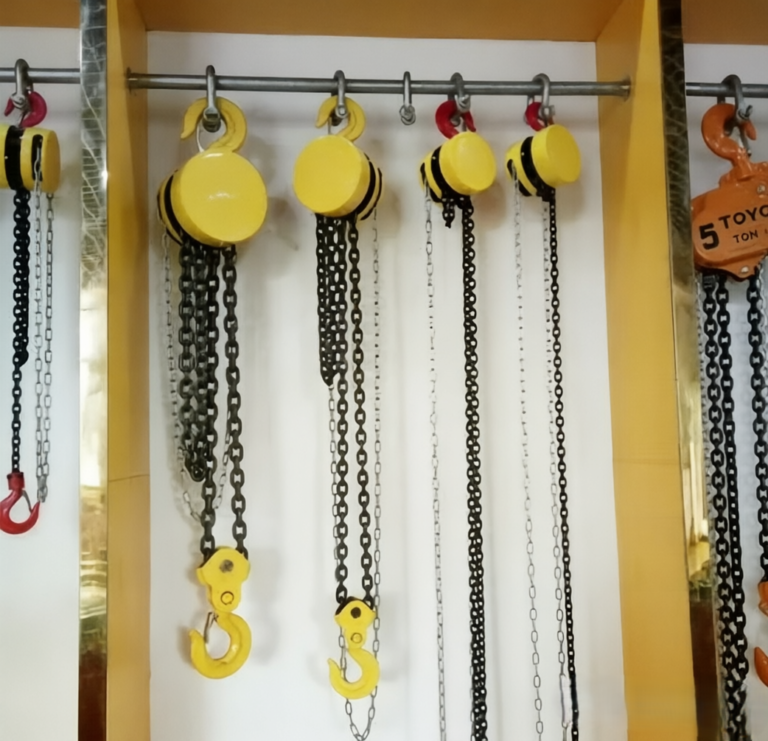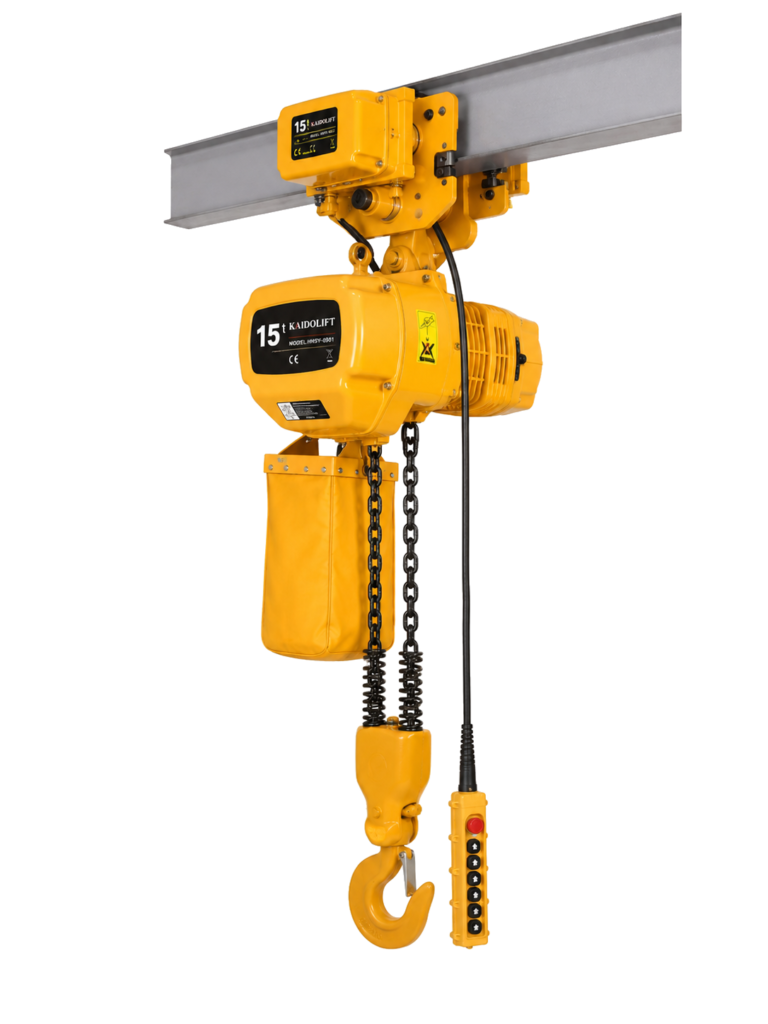
On construction sites across Latin America—from high-rise projects in Mexico City to mining operations in northern Chile and infrastructure developments in São Paulo—manual chain hoists (chain blocks) are indispensable for positioning steel beams, lifting heavy equipment, and handling building materials in areas without electricity.
Yet these versatile tools are also among the most frequently misused pieces of lifting equipment on site. Field data shows that more than 90% of manual chain hoist accidents are caused by incorrect operation rather than product defects. This guide, aligned with ASME B30.16 and local standards including Brazil’s NR-11 and Chile’s NCh 2245, provides a practical framework for safe manual chain hoist use and specifies high-reliability equipment built for harsh construction environments.
1. Applicable Standards & Inspection Classifications
1.1 Key Standards for Manual Chain Hoists
| Standard | Scope | Key Requirement |
| ASME B30.16 | Overhead underhung & stationary hoists (hand chain-operated) | Construction, installation, operation, inspection, testing, maintenance |
| ASME HST-2 | Hand chain manually-operated chain hoists | Performance requirements for vertical lifting service |
| Brazil NR-11 | Transport, movement, storage & handling of materials | Continuous inspection of chains, pulleys, hooks; defective parts must be replaced |
| Chile NCh 2245 | Safety requirements for lifting equipment and hoists | Regular structural integrity checks and load brake verification |
1.2 Inspection Classifications per ASME B30.16
ASME B30.16 defines three inspection categories based on service conditions:
| Inspection Type | Normal Service | Heavy Service | Severe Service |
| Preoperation | Before each shift | Before each shift | Before each shift |
| Frequent | Monthly | Weekly to monthly | Daily to weekly |
| Periodic | Annually | Semi-annually | Quarterly |
Service definitions:
- Normal Service: Randomly distributed loads within rated capacity; uniform loads below 65% of rated load for 15% or less of usage time.
- Heavy Service: Static loads exceeding normal service conditions.
- Severe Service: Operations exceeding normal or heavy service with abnormal environmental conditions.
💡 Storage Rule: For hoists unused for 1–12 months, inspect per frequent criteria before use. Hoists unused for over 1 year require a full periodic inspection.
2. Common Safety Mistakes & Prevention
2.1 The Seven Most Frequent Errors
Field data from construction sites identifies the following common mistakes and their quantified impacts:
| Mistake | Proportion | Quantified Impact |
| Overloading | ≈35% of serious accidents | Brake load +25–50%; chain fatigue life -60% |
| Side pulling / non-vertical lifting | ≈20% | Chain & load wheel wear 2–3× higher |
| Insufficient suspension point strength | ≈15% | Anchor failure risk 3–5× higher |
| Twisted or misaligned load chain | ≈10% | Local stress on chain links +40% |
| Jerking the hand chain | ≈8% | Impact load on gears 1.5–2× higher |
| Continuous lifting operations | ≈7% | Brake overheating; reduced service life |
| Lack of inspection & maintenance | ≈5% | Chain jamming; reduced braking reliability |
2.2 Critical Safety Rules
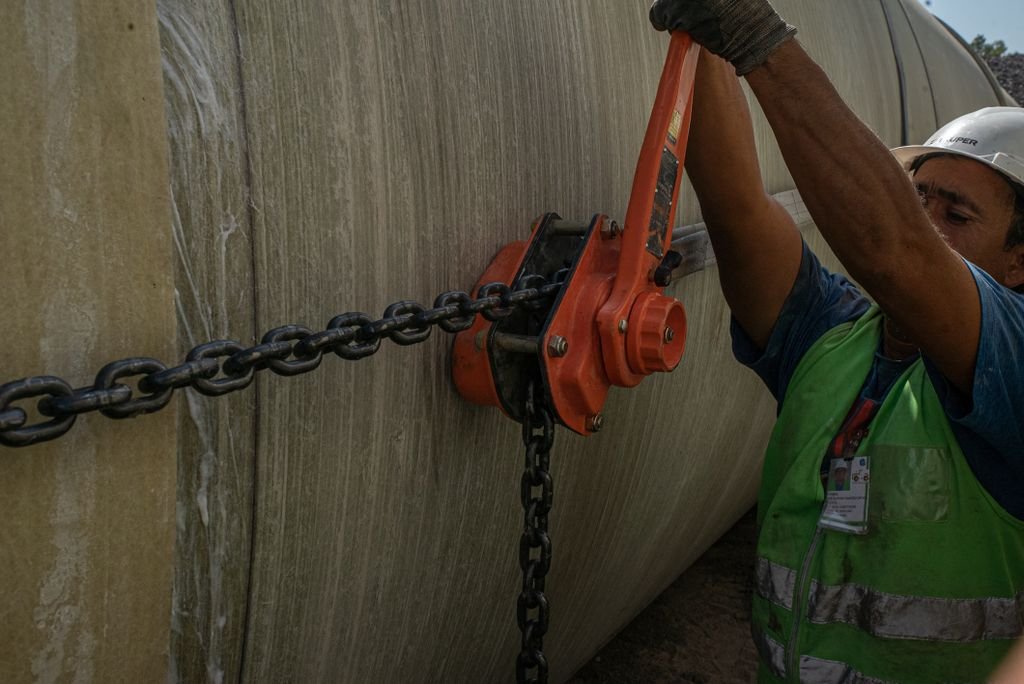
⚠️ CRITICAL NOTICE: Manual chain hoists are designed for vertical lifting only. Side pulling introduces severe bending stresses that can cause chain jamming, uneven load distribution, and sudden brake or link failure.
- Never exceed the rated load – even with G80 lifting chain (4:1 safety factor), overloading is strictly prohibited.
- Anchor strength must exceed hoist capacity – verify structural loading capacities before hanging hoists.
- Do not leave a loaded hoist unattended at any time.
- Hooks shall not be tip loaded – always seat the load properly in the hook bowl.
- Do not lift loads over personnel – clear and signal the lifting zone prior to operation.
- Never operate with a twisted or kinked load chain.
- No makeshift fasteners – bolts, wires, or rebar must never substitute for proper load pins.
3. Key Design Features for Safety & Durability
To minimize operator error and withstand harsh construction environments, industrial-grade hoists like our HSZ-A and HSVL series incorporate critical internal safety mechanisms:
- Double-Pawl Brake System: Dual friction-disc brake pawls provide instant redundant braking, preventing accidental slippage under maximum load.
- Grade 80 (G80) Alloy Steel Chain: Heat-treated black oxide or zinc-plated manganese steel chain offers high strength, wear resistance, and corrosion protection.
- Deep-Groove Pocket Load Wheel: Precision-machined chain wheel prevents chain jumping, binding, and twisting during smooth operations.
- 360° Swivel Drop-Forged Hooks: Heat-treated safety hooks with heavy-duty latches bend slowly under extreme overload to give a visual warning rather than snapping instantly.
4. Product Technical Specifications (HSZ-A & HSVL Series)
Select the appropriate manual chain block model based on your capacity and lifting height requirements:
| Model | Rated Capacity (t) | Standard Lift (m) | Running Test Load (t) | Load Chain Fall No. | Load Chain Dia. (mm) | Net Weight (kg) |
| HSZ-A 0.5T | 0.5 | 2.5 / 3.0 | 0.75 | 1 | 6.0 | 8.5 |
| HSZ-A 1T | 1.0 | 2.5 / 3.0 | 1.5 | 1 | 6.0 | 11.0 |
| HSZ-A 2T | 2.0 | 3.0 | 3.0 | 2 | 6.0 | 14.2 |
| HSZ-A 3T | 3.0 | 3.0 | 4.5 | 2 | 8.0 | 24.0 |
| HSVL 5T | 5.0 | 3.0 | 7.5 | 2 | 10.0 | 36.0 |
| HSVL 10T | 10.0 | 3.0 | 12.5 | 4 | 10.0 | 68.0 |
Custom lift heights (up to 12m) and specialized anti-corrosion/explosion-proof coatings are available upon request.
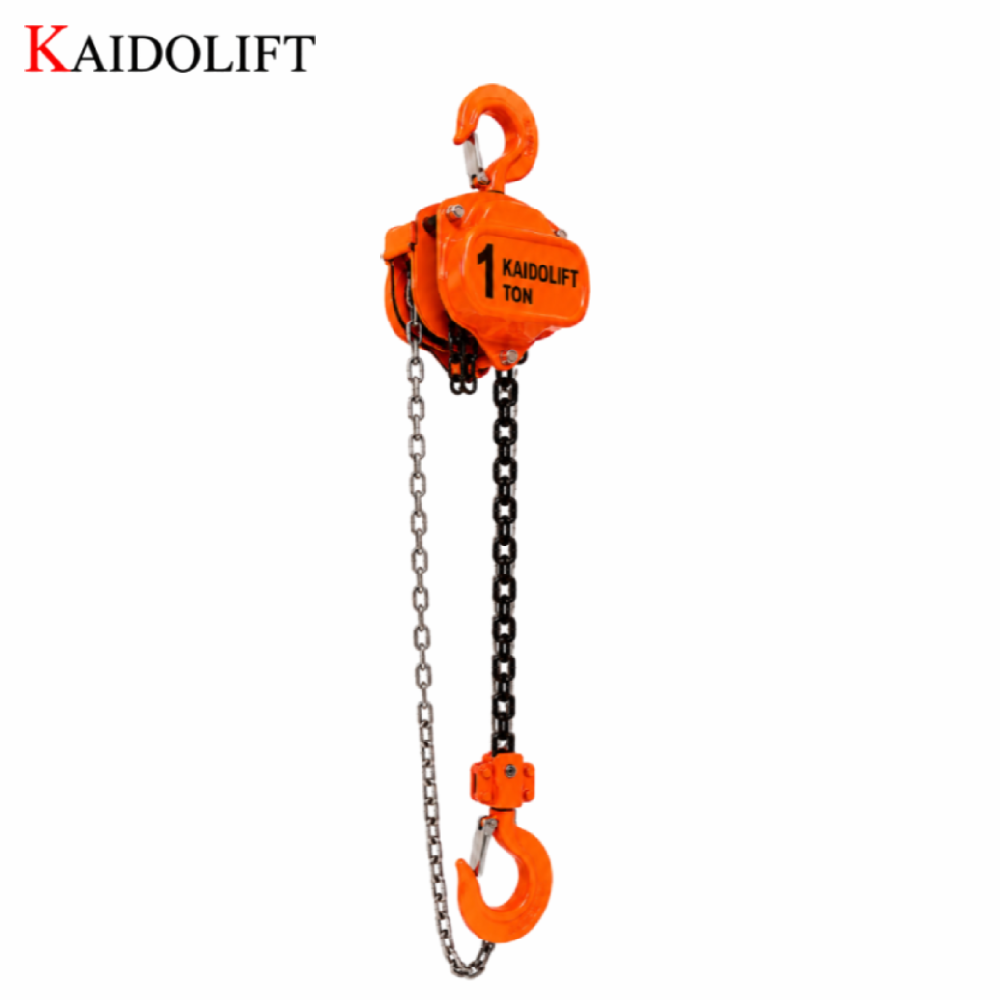
HS-VL Manual Chain Hoist – Polipasto Manual de Cadena para Elevación Industrial
Buy HS‑VL manual chain hoist (polipasto de cadena) with double pawl brake, alloy load chain, and low hand pull. Ideal chain block for marine, construction, warehouse, and steel maintenance. ASME B30.16 certified.
5. Inspection Checklist & Maintenance Wear Limits
5.1 Daily Visual Inspection (Pre-Use)
- Load Chain: Check all links for gouges, nicks, rust, welded spatters, or distortion. Verify the chain is clean and lubricated.
- Hooks & Latches: Ensure 360° rotation and positive engagement of safety latches.
- Functional Test: Pull hand chain in both directions. Operation must be smooth with no binding, jumping, slipping, or unusual gear noise.
5.2 Mandatory Wear Rejection Limits
Replace components immediately if inspection reveals any of the following metrics:
| Component | Wear Limit / Rejection Threshold | Action Required |
| Load Chain Link | Elongation exceeds 3% over original pitch | Replace complete chain |
| Load Chain Link Wire | Link diameter wear exceeds 10% | Replace complete chain |
| Hook Throat Opening | Stretch/opening increases by 15% | Replace hook assembly |
| Hook Twist | Bending or twisting exceeds 10 degrees | Replace hook assembly |
| Brake Friction Disc | Contaminated with oil or worn beyond limit | Replace brake pads |
6. Environmental Factors & Field Adaptation
| Field Condition | Impact on Equipment | Required Preventive Action |
| Dusty / Abrasive Sites | Rapid wear on gears & load wheels | Clean and apply dry lubricant daily |
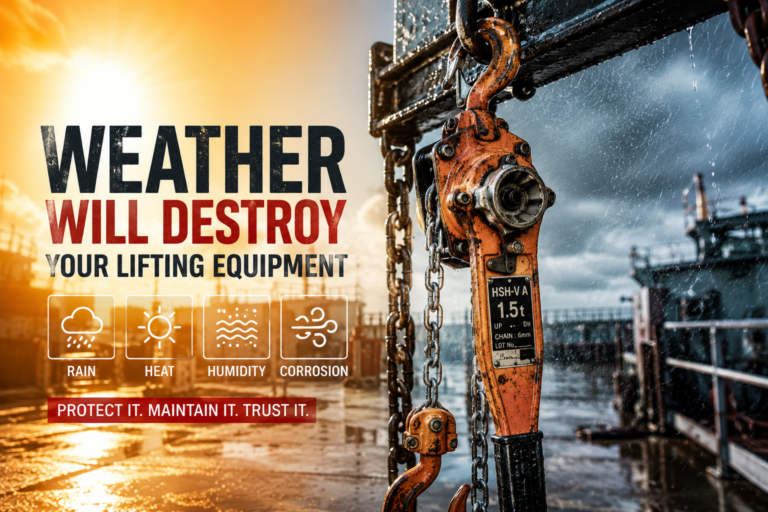
| Coastal / High Humidity | Corrosion on chain links & brake disc | Use zinc-plated G80 chain & rust-inhibitive oil |
| High Elevation / Mining | Extreme temperature changes & dust | Enclosed gear covers; inspect brake weekly |
| Elevated Beam Work | Fall hazard for equipment/loads | Secure hoist with safety line; follow OSHA rules |
7. Next Steps & Resources
Proper selection, regular inspection, and operator adherence to ASME B30.16 guidelines guarantee maximum uptime and safety across your jobsites.