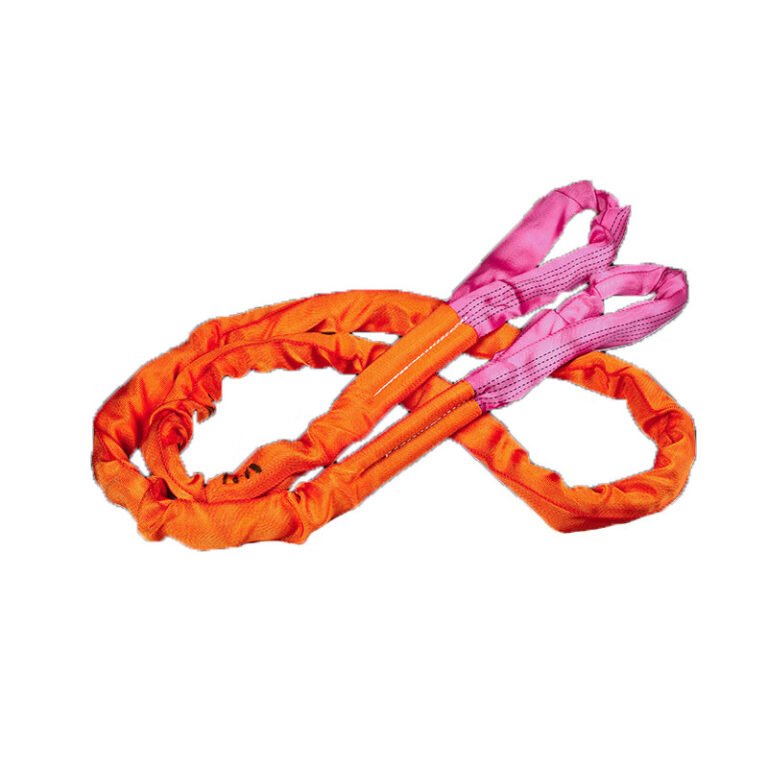
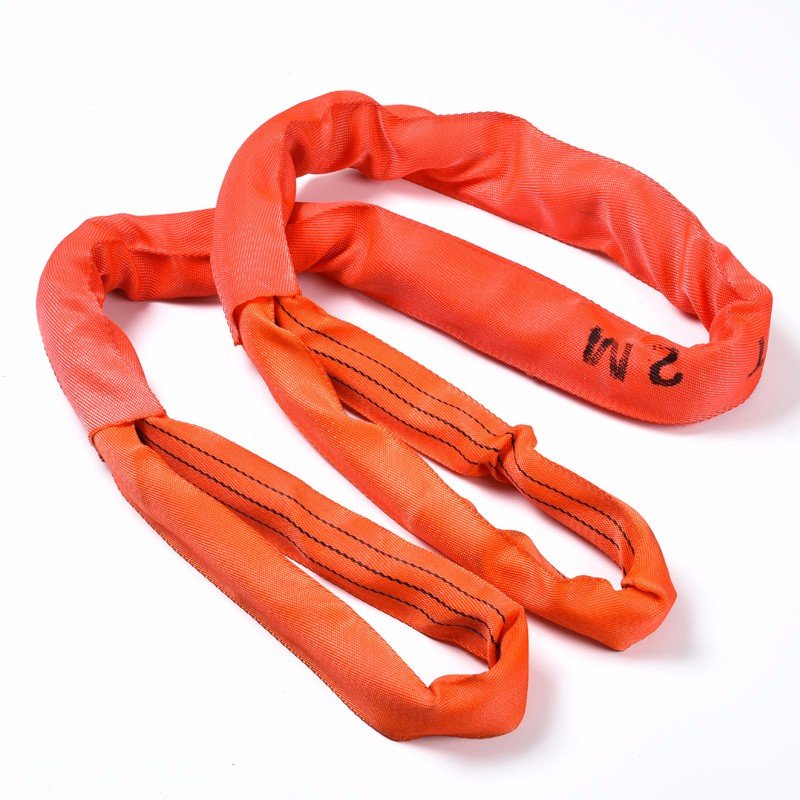
Sourcing polyester lifting slings from an Original Equipment Manufacturer (OEM) is a common procurement strategy for distributors, engineering firms, and industrial operators across Latin America. The promise of cost savings, customization, and direct supply is appealing. However, the reality is that OEM lifting slings carry distinct risks if the buyer does not conduct proper technical due diligence.
Unlike branded or off-the-shelf products, OEM slings are manufactured to the buyer’s specifications—but those specifications must be correct, complete, and verifiable. A missing test certificate, an ambiguous material specification, or an unqualified production facility can result in slings that fail inspection, fail on the job site, or fail to meet regional regulatory requirements under Brazil NR-11, Mexico NOM-151, or Chile NCh 2245.
This guide provides a comprehensive checklist of what to confirm before purchasing custom webbing slings from an OEM supplier. It covers manufacturer credentials, material verification, testing and certification, customization documentation, packaging, and post-delivery validation.
1. Manufacturer Credentials and Facility Verification
The first and most critical step in OEM sourcing is verifying that the manufacturer is legitimate, qualified, and capable of producing slings that meet international standards.
Certification and Audits
Confirm that the OEM holds valid certifications for the production of polyester lifting slings:
| Certification | What It Confirms | Relevance |
|---|---|---|
| ISO 9001 | Quality management system | Ensures consistent production processes |
| EN 1492-1 / EN 1492-2 | Product compliance | Slings meet European safety standards |
| ASME B30.9 | Product compliance | Slings meet American rigging standards |
| CE Marking | EU regulatory compliance | Required for export to many markets |
| Factory Audit Report | Facility capability | Verifies equipment, staff, and capacity |
⚠️ CRITICAL NOTICE: A manufacturer claiming compliance with EN 1492-1 must be able to provide type test certificates from an accredited testing laboratory. A self-declaration is not sufficient.
Request Documentation
Before placing an order, request and review the following:
- Type Test Certificates: Issued by an accredited third-party laboratory, confirming the sling design meets the required safety factor and breaking strength
- Quality Manual: Outlines the manufacturer’s quality control procedures
- Material Certificates: Confirm the polyester yarn supplier and yarn specifications
- Production Capacity Statement: Verifies the manufacturer can meet your volume and lead time requirements
Factory Visit or Third-Party Inspection
For large or critical orders, consider either:
- Conducting a factory visit: Observe production processes, quality control, and testing firsthand
- Engaging a third-party inspection company: Perform pre-shipment inspection and random sample testing
🔧 MANDATORY PRACTICE: Never place a large OEM order without verifying the manufacturer’s credentials. Counterfeit or substandard slings have caused catastrophic failures across LatAm job sites. When in doubt, request samples for independent testing before committing to full production.
Checklist: Manufacturer Credentials
- [ ] ISO 9001 certificate (current, valid)
- [ ] EN 1492-1 or EN 1492-2 type test certificates (third-party)
- [ ] CE marking documentation (if applicable)
- [ ] Factory audit report (last 12 months)
- [ ] Material supplier certificates
- [ ] References from other buyers (especially in LatAm)
2. Material Quality and Production Process Verification
The performance of a polyester webbing sling depends entirely on the quality of the raw materials and the consistency of the manufacturing process.
Yarn Quality
Confirm that the OEM uses:
- 100% high-tenacity polyester (PES) yarn
- Yarn from a reputable fiber manufacturer (e.g., Invista, Teijin, Toyobo)
- Yarn with documented tenacity, elongation, and shrinkage specifications
- Yarn that is UV-stabilized (especially for outdoor applications)
Red Flags:
- Manufacturer cannot identify the yarn supplier
- Yarn specifications are not provided
- Price is significantly below market average (often indicates lower-grade or recycled fibers)
Webbing Quality
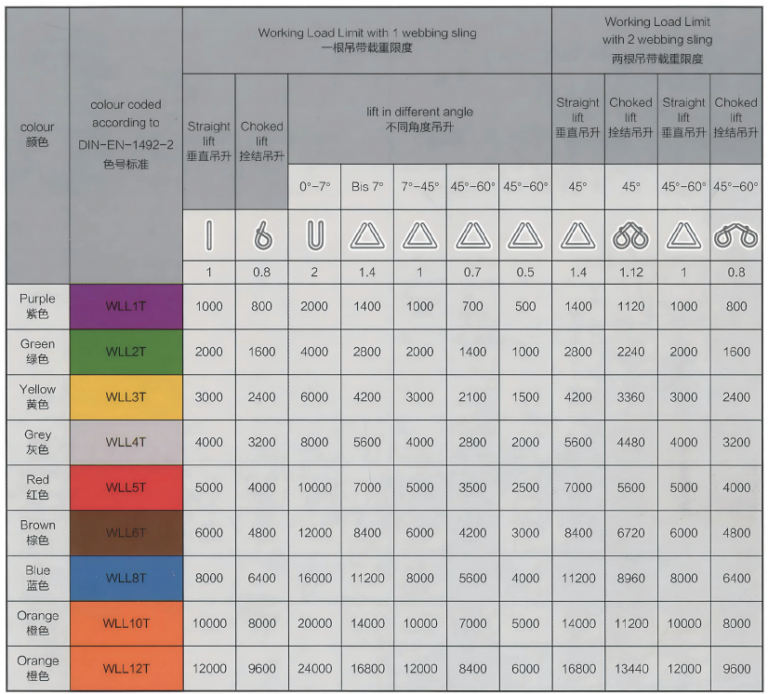
The flat lifting sling webbing should be:
- Uniform in width and thickness
- Free from defects (snags, loose yarns, contamination)
- Consistent in color (indicates uniform dyeing and UV stabilization)
- Finished with clear, legible identification markings
Production Process Controls
Ask the OEM about their production process:
| Process Step | What to Confirm |
|---|---|
| Yarn Preparation | Tension control, moisture content |
| Weaving | Loom type, weave density, warp tension |
| Heat Setting | Temperature and time parameters |
| Cutting and Folding | Accuracy of cut length, fold alignment |
| Stitching (Eye-and-Eye) | Stitch type, thread material, stitch density |
| Labeling | Tag material, marking permanence |
| Final Inspection | 100% visual inspection? Sample-based? |
⚠️ CRITICAL NOTICE: Stitching is one of the most common failure points in custom webbing slings. Confirm that the OEM uses high-tenacity polyester thread with a minimum breaking strength equal to the sling’s WLL, and that stitch density meets the requirements of EN 1492-1 (typically minimum 8 stitches per 100mm).
3. Customization Capabilities and Design Validation
OEM purchasing often involves customization—length, width, color, labeling, and special features. Confirm that the OEM can deliver these specifications accurately and reliably.
Length Tolerances
For custom webbing slings, length accuracy is critical.
| Parameter | Standard Tolerance |
|---|---|
| Effective Working Length (EWL) | ±2% of specified length (EN 1492-1) |
| Overall Length | Varies by manufacturer; confirm before ordering |
Width and Layering
If the OEM offers multi-layer slings, confirm:
- Number of layers matches the design specifications
- Layer alignment is uniform (no offset that creates weak points)
- Layering method (stacked vs. interwoven) affects flexibility and strength
Custom Labeling
Many buyers require custom labels with:
- Their company logo and branding
- Specific WLL markings
- Serial numbers or batch tracking
- QR codes linking to online documentation
Confirm:
- The labeling material is permanent and legible (resistant to oil, chemicals, UV)
- The labeling method is heat-sealed or sewn, not merely printed on the surface
Special Features
If you require special features, confirm the OEM has the capability:
| Feature | Confirmation Required |
|---|---|
| Edge protection sleeves | Material type, length, attachment method |
| Corner protectors | Material, size, compatibility with sling |
| PVC coating | Coating thickness, adhesion test |
| UV stabilization | UV stabilizer type, UV resistance test data |
| Heat resistance | Maximum operating temperature |
4. Quality Assurance, Testing, and Documentation
A polyester lifting sling manufacturer that does not provide thorough documentation is not a manufacturer you should trust. Confirm that the following documentation is included with every order.
Required Documentation
| Document | What It Contains | Purpose |
|---|---|---|
| Test Certificate (Type Test) | Breaking strength, elongation, safety factor | Confirms design compliance |
| Inspection Report | Dimensional check, visual inspection results | Confirms batch compliance |
| Material Certificate | Yarn supplier, yarn test results | Confirms raw material quality |
| WLL Confirmation | WLL for vertical, choke, and basket hitches | Provides safe usage data |
| Operating and Maintenance Instructions | Storage, inspection, discard criteria | Guides user on safe operation |
Testing Requirements Under EN 1492-1
Under EN 1492-1, the manufacturer is responsible for ensuring that:
- Each production batch undergoes visual and dimensional inspection
- Proof load testing is performed on a sample basis (typically 2× WLL)
- Breaking strength testing is performed on a sample basis (typical 7× WLL = minimum breaking load)
Request to see:
- Proof load test records for your specific production batch
- Breaking strength test records (if applicable)
- Evidence that testing was conducted by qualified personnel with calibrated equipment
Lot Traceability
Confirm the OEM has a traceability system that links each sling (or production lot) to:
- The specific production run
- The material suppliers (yarn, thread, labels)
- The testing records
- The date of manufacture
🔧 MANDATORY PRACTICE: Under ASME B30.9, the user must be able to identify the sling manufacturer, the rated capacity, and the material type. If a sling cannot be traced back to the OEM, it must be removed from service. Confirm traceability documentation before placing your order.
Checklist: Quality Assurance
- [ ] Type test certificate provided (third-party accredited lab)
- [ ] Batch inspection report for your specific order
- [ ] Material certificate from yarn supplier
- [ ] Proof load test records (batch-specific)
- [ ] Traceability system confirmed (serial numbers or batch codes)
- [ ] Operating and maintenance instructions included
- [ ] All labels/markings confirmed (legible, permanent, correctly marked)
5. Delivery, Packaging, and Post-Delivery Validation
Packaging Quality
Inspect the OEM’s packaging specifications. Slings should be:
- Bundled in a way that prevents tangling and damage
- Protected from moisture (shrink wrap or plastic bags) during shipping
- Clearly labeled with the batch number, contents, and quantity
- Protected from sharp edges during transit (packaging should prevent cuts)
Delivery Documentation
Before shipping, confirm that the OEM provides:
- Packing list identifying each item and quantity
- Commercial invoice with correct product descriptions
- Certificate of origin (if required for customs)
- Inspection certificate for the batch being shipped
- Material safety data sheets (if applicable)
Post-Delivery Validation
Upon receiving the shipment, conduct your own validation:
1. Visual Inspection
- Check all slings for visible defects (cuts, fraying, discoloration)
- Verify labels match the order specifications
- Check that all tags are legible and securely attached
2. Dimensional Confirmation
- Measure the effective working length of a sample
- Measure the width and thickness
- Verify color matches the order (if color-coded)
3. Documentation Verification
- Confirm that the inspection report matches the shipment
- Verify that serial numbers or batch codes match the documentation
- Ensure the type test certificate is included
4. Independent Testing (For Critical Orders)
For large or safety-critical orders, consider sending samples to an independent testing laboratory for:
- Breaking strength verification
- Proof load verification
- Chemical resistance testing
- UV degradation testing
6. Regional Compliance Considerations for LatAm
When sourcing polyester lifting slings for use in Latin America, confirm that the slings meet regional regulatory requirements.
| Region | Standard | Key Requirement |
|---|---|---|
| Brazil | NR-11 (Annex 1) | Regular periodic inspection required; slings must be traceable and documented |
| Mexico | NOM-151-SSA1 | Technical safety requirements for lifting equipment; markings must be in Spanish |
| Chile | NCh 2245 | Technical specifications for textile slings; certification of compliance with international standards |
| General | OSHA 1910.184 | General duty clause; requires safe and certified equipment |
Import Documentation
Work with your OEM to confirm the required documentation for customs clearance in your country:
- Certificate of origin (for tariff reductions under trade agreements)
- Material safety data sheets (if required)
- Certificate of compliance with local standards
- Packing list with accurate descriptions
Conclusion
Sourcing polyester lifting slings from an OEM can be a cost-effective and reliable way to secure custom lifting equipment—provided you conduct thorough due diligence before placing an order.
By verifying:
- Manufacturer credentials and third-party certifications
- Material quality and production process controls
- Customization capabilities and design validation
- Quality assurance testing and documentation
- Delivery, packaging, and post-delivery validation
…you can minimize the risk of receiving substandard or non-compliant slings. The cost of investigation before purchase is far lower than the cost of a failed lift, a regulatory fine, or a workplace injury.
For operations across Latin America, compliance with Brazil NR-11, Mexico NOM-151, and Chile NCh 2245 is not optional. Ensure that the polyester lifting sling manufacturer you select can provide the documentation and traceability required to meet these standards. When in doubt, request samples for independent testing—it is a small investment that protects your operations, your workers, and your reputation.
📋 Need an OEM Sourcing Checklist for Your Procurement Team?
Download our LatAm-Compliant OEM Sourcing Checklist (PDF) —includes manufacturer verification, material quality review, documentation checklists, and delivery validation protocols. Designed for procurement professionals across Brazil (NR-11), Mexico (NOM-151), and Chile (NCh 2245).
[Download the OEM Sourcing Checklist Now]