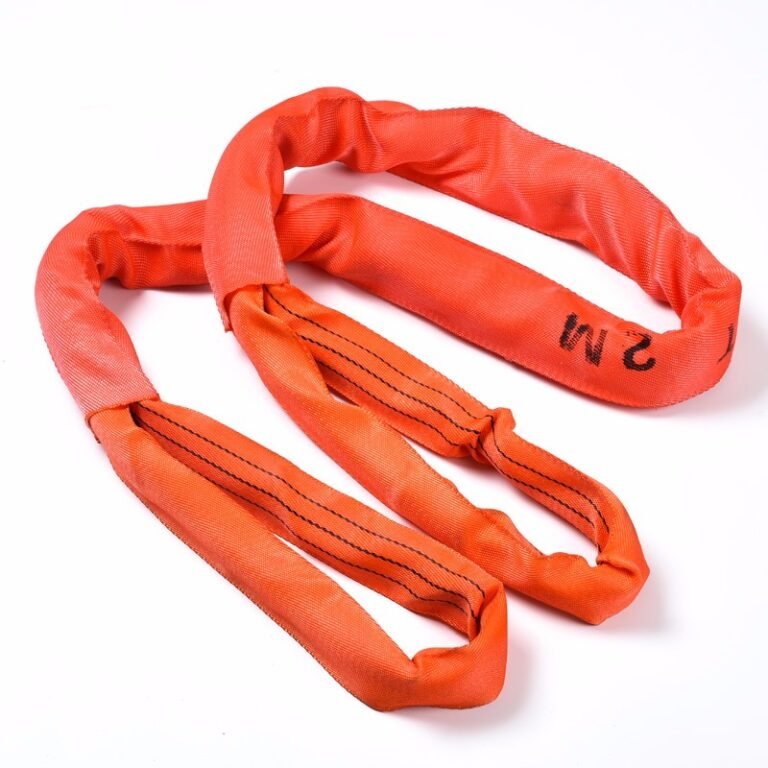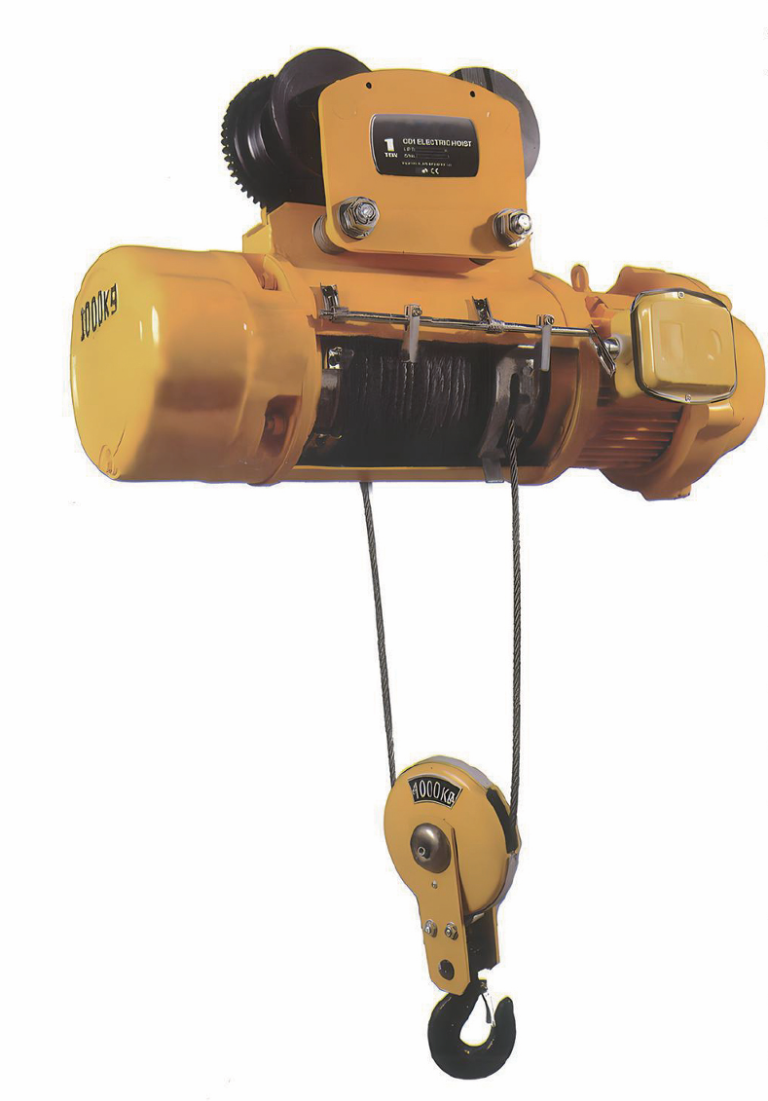
HGS-B Electric Hoists feature a compact and practical structure, specially designed for daily material handling, vertical lifting and short-distance horizontal transfer in industrial scenarios. They are widely applied in workshops, warehouses, factories, construction sites, equipment maintenance areas and production lines, suitable for lifting various industrial loads such as mechanical accessories, steel components, molds, cartons and equipment parts.
Different from Manual Chain Hoist, HGS-B Electric Hoists are equipped with an electric lifting system consisting of steel wire ropes, rope drums, hook assemblies, traveling trolleys and pendant control handles, which greatly improves lifting efficiency and reduces manual labor intensity. When installed on I-beams or steel beams, the hoists can not only lift goods vertically, but also move suspended loads horizontally along fixed tracks, enabling standardized overhead material transfer operations.
This guide elaborates on five practical dimensions: model selection, I-beam matching application scenarios, installation acceptance, common fault prevention, and full-cycle maintenance management. It serves as a reference for equipment purchasers, factory managers and on-site operators to realize the safe and efficient selection and application of HGS-B Electric Hoists.
Core Advantages of HGS-B Electric Hoists
HGS-B Electric Hoists are tailored for light-duty and medium-frequency lifting working conditions. Featuring compact structure, simple operation and flexible movement, they are cost-effective electric lifting equipment optimal for small and medium-sized industrial sites.
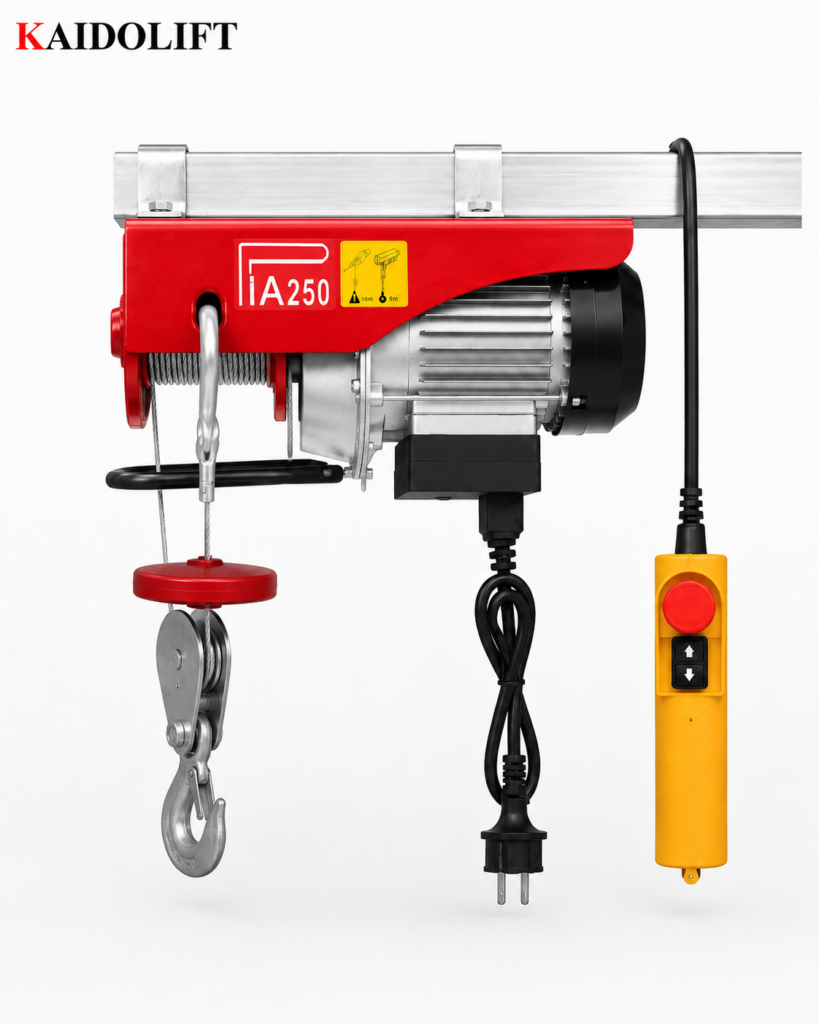
PA Mini Electric Hoist (Polipasto Eléctrico Mini) | 100kg to 1000kg, 220V/230V Portable Wire Rope Winch
Shop high-quality PA Mini Electric Hoists (PA-200 to PA-1000, wire rope electric hoist). Versatile single/double hook setup, pure copper 220V/230V motor, hoisting capacities from 100kg up to 1 Ton. Ideal for LATAM workshops, garages, and light logistics. Factory direct wholesale pricing.
Integrated Electric Lifting System
Motor-driven lifting delivers much higher working efficiency than manual chain hoists and other manual lifting tools. For repetitive lifting operations in workshops and warehouses, electric operation reduces labor consumption and accelerates daily material handling speed.
Steel Wire Rope and Drum Transmission Structure
The cooperation of steel wire ropes and rope drums enables stable vertical lifting. With mature application, this structure ensures smooth lifting operation, accurate load positioning and flexible configuration of lifting height.
Dual Operation Modes: Single Hook & Double Hook
The HGS-B series supports two lifting modes: single hook and double hook. The single hook mode provides faster lifting speed and higher lifting height, while the double hook mode doubles the rated lifting capacity with reduced lifting speed and height. Purchasers shall select the appropriate mode according to the actual load weight and lifting height requirements.
I-Beam Traveling Function
Equipped with a traveling trolley, the hoist can move horizontally along I-beams and steel beams, supporting short-distance material transfer between fixed working stations, such as from storage areas to assembly stations, production lines to maintenance areas, and loading points to processing areas.
Pendant Handle Control
Operators can control lifting, lowering and horizontal movement with one click via the pendant handle. The intuitive and simple operation is applicable to daily industrial lifting work.

Model Selection Standards for HGS-B Electric Hoists
Proper model selection is the first step for safe and efficient lifting. An undersized hoist will lead to overload safety risks, while an oversized model for light-duty working conditions will increase procurement costs and reduce operational economy.
Five core parameters shall be prioritized when selecting HGS-B Electric Hoists: rated lifting capacity, lifting height, lifting speed, power supply and I-beam installation adaptation conditions.
Rated Lifting Capacity Selection
The HGS-B series covers multiple PA models with different rated loads under single and double hook modes. The parameter comparison table is as follows:
| Model | Single Hook Capacity | Double Hook Capacity |
| PA-200 | 100 kg | 200 kg |
| PA-250 | 125 kg | 250 kg |
| PA-300 | 150 kg | 300 kg |
| PA-400 | 200 kg | 400 kg |
| PA-500 | 250 kg | 500 kg |
| PA-600 | 300 kg | 600 kg |
| PA-800 | 400 kg | 800 kg |
| PA-1000 | 500 kg | 1000 kg |
In actual selection, the rated capacity of the equipment must be greater than the maximum on-site lifting load. Long-term operation near the full load limit is prohibited. A larger safety margin shall be reserved for lifting irregular loads such as molds and steel components with uncertain center of gravity.
Single Hook / Double Hook Mode Selection
The two lifting modes of HGS-B Electric Hoists have distinct applicable scenarios:
Single Hook Mode
Suitable for light loads, featuring faster lifting speed and higher lifting height. It is widely used for conventional material handling, carton lifting, small parts transfer and light equipment maintenance.
Double Hook Mode
Applicable for scenarios requiring higher lifting capacity. It features reduced lifting speed and lower effective lifting height, yet enables the hoist to carry heavier loads within the rated range.
During procurement, purchasers shall not only confirm the required lifting weight, but also clarify the required lifting height and working efficiency.
Lifting Height and Working Space
For the same PA model, the effective lifting height is higher in single hook operation and lower in double hook operation. On-site measurement of the following data is required before ordering:
- Vertical height from the bottom of the I-beam to the ground
- Maximum lifting stroke required for loads
- Occupied height of hook assembly and lifting accessories
- Safety distance between loads and surrounding equipment
- Whether the lifting path needs to cross machine tools, shelves and workbenches
For sites with limited floor height, the effective lifting height must be accurately calculated before installation.
Power Supply Matching
The HGS-B series is standardly equipped with 220/230V 50Hz single-phase power supply. Before procurement and installation, verify whether the on-site voltage, frequency and socket specifications match the working conditions.
Ex overseas purchasers need to confirm power standards specially, as different countries adopt different power specifications. Mismatched voltage will cause motor overheating, insufficient power, abnormal noise and electrical failures.
I-Beam and Trolley Adaptation
Track-mounted installation requires perfect matching between the hoist and the I-beam. Verify the following items before purchase:
- I-beam model and specification size
- I-beam flange width
- Steel beam strength and load-bearing capacity
- Straightness and levelness of the steel beam
- Matching degree between trolley wheel spacing and track
- Installation of limit stops at both ends of the beam
A well-matched steel beam ensures smooth trolley traveling and reduces abnormal wheel wear, body shaking and load deviation.
Application Scenarios of HGS-B Electric Hoists
HGS-B Electric Hoists are designed for light and medium industrial lifting, with outstanding advantages of small installation footprint, simple operation and flexible track movement.
Workshop Material Lifting
Mechanical workshops often require lifting motors, spare parts, small machine tools and metal processing components. Installed on fixed steel beams above working stations, HGS-B Electric Hoists support daily loading, unloading and load position adjustment. Compared with manual handling, electric lifting greatly improves work efficiency and reduces operator fatigue, ideal for repetitive daily lifting tasks.

Warehouse Goods Handling
Warehouses need to transfer cartons, packaged goods, spare parts and small equipment between storage areas and handling points. Matched with overhead I-beam tracks, the hoists complete short-distance transfer without occupying floor space, perfectly adapting to small warehouses with narrow spaces inaccessible to forklifts and pallet trucks.

Factory Production Line Support
The hoists can be used as auxiliary lifting equipment for assembly, maintenance and material feeding to lift, position and transfer components between production line stations, such as lifting workpieces from workbenches, moving them along beams and lowering them to the next process station.
Mold and Mechanical Component Handling
Molds and metal components are heavy and difficult to handle manually. HGS-B Electric Hoists support lifting and positioning during mold replacement, machine maintenance and component installation. Sudden start-stop operation is prohibited during mold and precision component handling, and loads must be balanced before lifting.
Construction and Equipment Maintenance
The hoists can lift tools, building materials, small steel parts and installation accessories at construction and maintenance sites. Their compact structure makes them suitable for temporary lifting points where large lifting equipment is uneconomical. For outdoor and semi-outdoor use, additional moisture-proof, dust-proof and rain-proof measures must be taken to ensure electrical safety.
Installation and Pre-Operation Acceptance Specifications
Pre-operation inspection is essential before putting HGS-B Electric Hoists into service. Most subsequent failures are caused by improper installation, mismatched I-beams and insufficient pre-use inspection.
Steel Beam Structure Inspection
Before installation, confirm that the steel beam meets load-bearing standards with a straight and undeformed body and stable support bases, capable of bearing the hoist self-weight, loads and dynamic impact force generated during lifting. Limit stops must be installed at both ends of the track to prevent trolley derailment.
No-Load Trolley Travel Test
After installation, push the trolley to travel along the full length of the beam with no load. The trolley shall run smoothly without jamming, severe shaking, abnormal noise or wheel slipping. Poor operation indicates problems with beam levelness, wheel spacing or fastening tightness, which require timely inspection and adjustment.
Steel Wire Rope Arrangement Inspection
Before operation, ensure the steel wire rope is neatly arranged in the drum grooves without disorder, overlapping or twisting. Disordered ropes will reduce lifting stability and accelerate wear. Keep the rope clean and free from severe deformation, broken wires, corrosion and flattening damage.
Hook and Safety Latch Inspection
The lower hook shall rotate flexibly with undeformed hook mouth and normally closed safety latch. Hooks with cracks, severe wear or damaged anti-drop latches are strictly prohibited from use.
Pendant Control No-Load Test
Test the response of lifting, lowering and traveling buttons under no-load conditions. Stop operation immediately and inspect the electrical system if there is slow response, unstable operation or button delay.
Common Faults and Early Warning Signs
Equipment failures rarely occur suddenly; they gradually deteriorate from minor abnormalities. Regular daily inspection can effectively avoid equipment downtime, component damage and lifting safety risks.
Abnormal Lifting Noise
Possible causes include insufficient lubrication, motor failure, gear wear, disordered steel wire ropes and loose fasteners. Stop the equipment for inspection immediately if the abnormal noise increases during operation.
Steel Wire Rope Disorder and Twisting
Load shaking, misaligned ropes and angled pulling will cause rope disorder. Long-term disordered operation will lead to rope extrusion and wear, shortening service life. Operators shall keep lifting vertical and strictly prohibit lateral oblique pulling.
Load Shaking During Travel
Sudden start-stop, unbalanced load hanging, uneven beam level and excessive trolley speed will cause severe load shaking. Impact force will damage loads, hoists and supporting beam structures. Smooth start-stop operation is critical when lifting molds, steel parts and precision workpieces.
Slow Pendant Button Response
Caused by aging contacts, loose wiring, damp control system and damaged electrical components. Running faulty equipment is prohibited, as it may lead to control failure and safety hazards.
Weak Lifting and Motor Overheating
Common causes include overload operation, unstable voltage, motor aging and brake failure. Reduce operation frequency and inspect load weight, voltage and motor condition if the motor overheats abnormally.
Operation Misunderstandings to Avoid
Most hoist failures result from improper operation rather than product quality problems. The following incorrect behaviors must be eliminated in daily use:
Overload Lifting
Lifting loads exceeding the rated capacity is strictly prohibited. Overload will damage the motor, steel wire rope, hook, brake and beam structure, and easily trigger major lifting safety accidents.
Oblique and Lateral Pulling
The equipment is only for vertical lifting. Oblique pulling will cause rope disorder, trolley deviation, severe load shaking and local stress concentration on the beam. For horizontal transfer, lift the load vertically off the ground first, then move the trolley along the beam.
Violent Start and Stop
Sudden start and stop generate huge impact load and accelerate the wear of mechanical and electrical parts. Smooth operation is particularly important when lifting molds, mechanical parts and precision components.
Long-Term Full-Load Continuous Operation
Continuous full-load operation easily causes motor overheating and brake fatigue. Arrange shutdown and cooling intervals according to actual operation intensity, and avoid over-duty long-term operation.
Outdoor Storage Without Protection
Long-term exposure to humid, rainy and corrosive environments accelerates rusting and aging of steel wire ropes, hooks, motors and electrical components. Store idle equipment in dry and ventilated areas.
Conclusion
HGS-B Electric Hoists are track-mounted lifting equipment suitable for workshops, warehouses, factories, maintenance areas and construction sites. Integrating electric lifting, steel wire rope transmission, hook assembly, track trolley and pendant control, they support both vertical lifting and short-distance overhead material transfer.
For safe and efficient application, select the correct model according to rated load, lifting height, lifting speed, working environment and I-beam specifications during procurement. Operators shall strictly implement installation and acceptance specifications, eliminate overload and oblique pulling violations, and establish a full-cycle maintenance mechanism including daily inspection, monthly maintenance, quarterly overhaul and annual professional detection.
With reasonable model selection, standardized installation and regular maintenance, HGS-B Electric Hoists can effectively improve enterprise lifting efficiency, reduce manual labor intensity, and ensure safe and stable daily material handling operations.