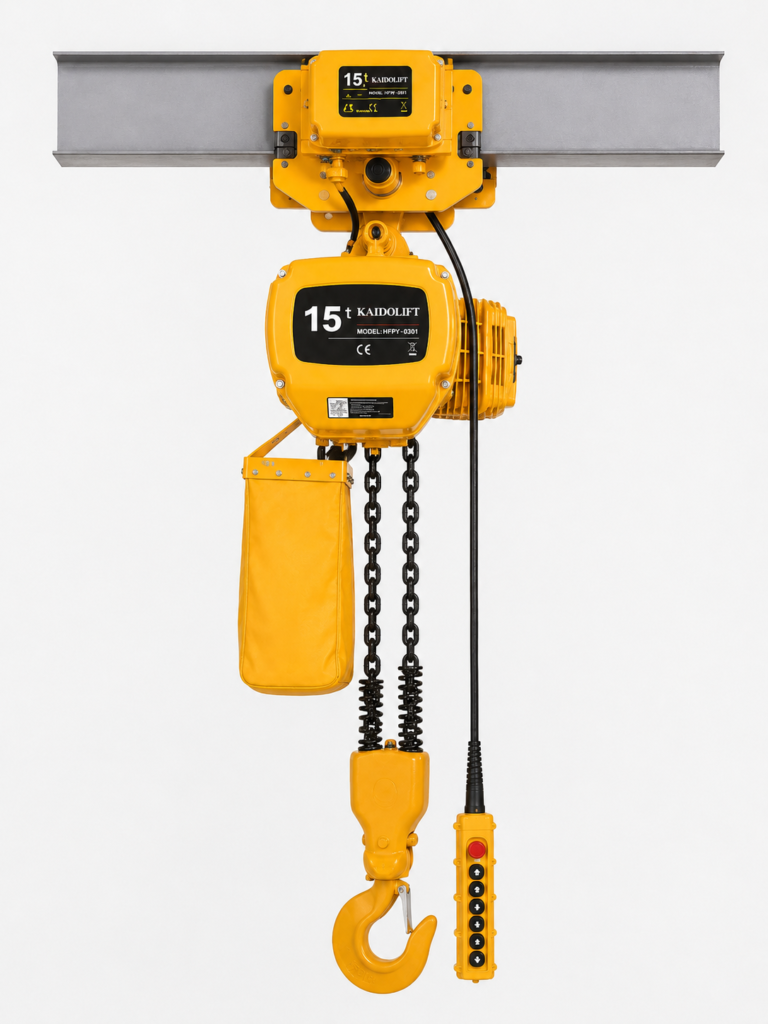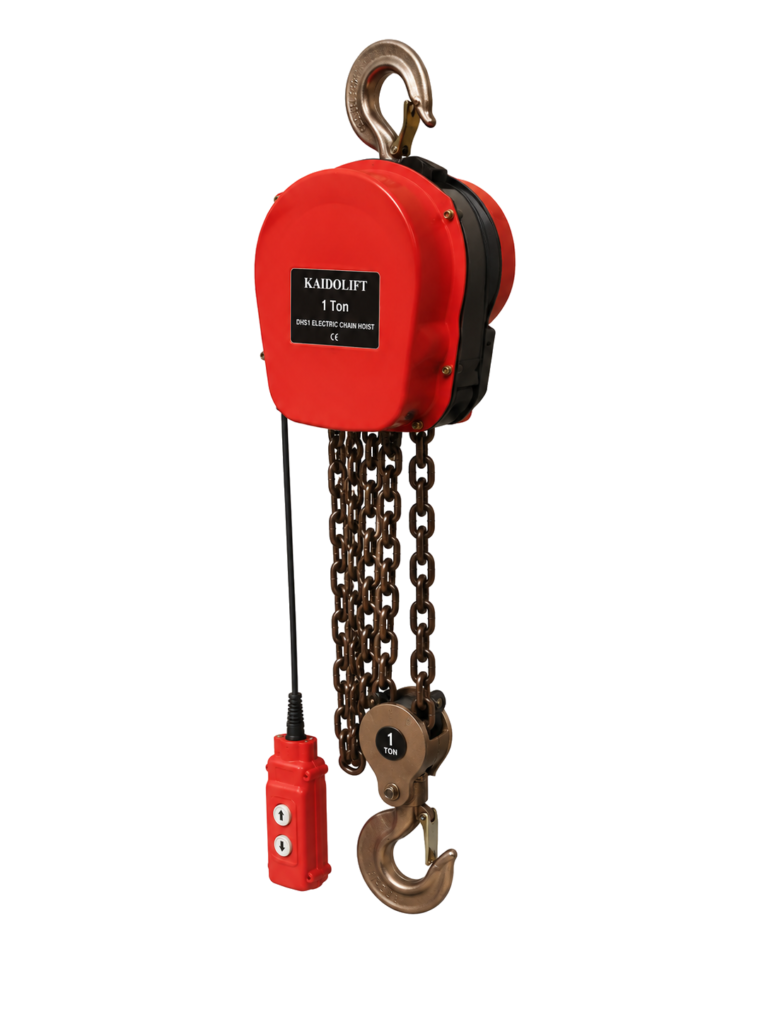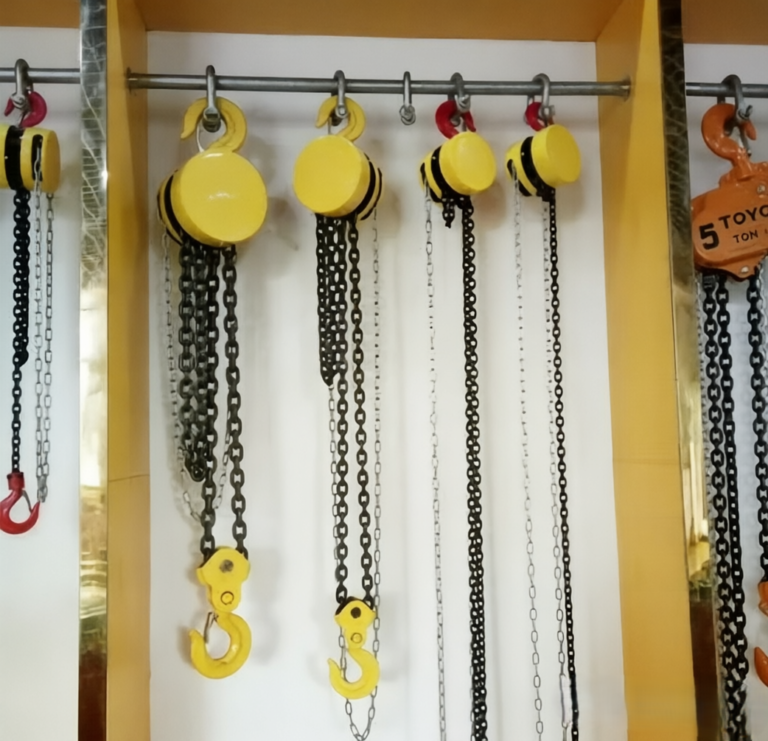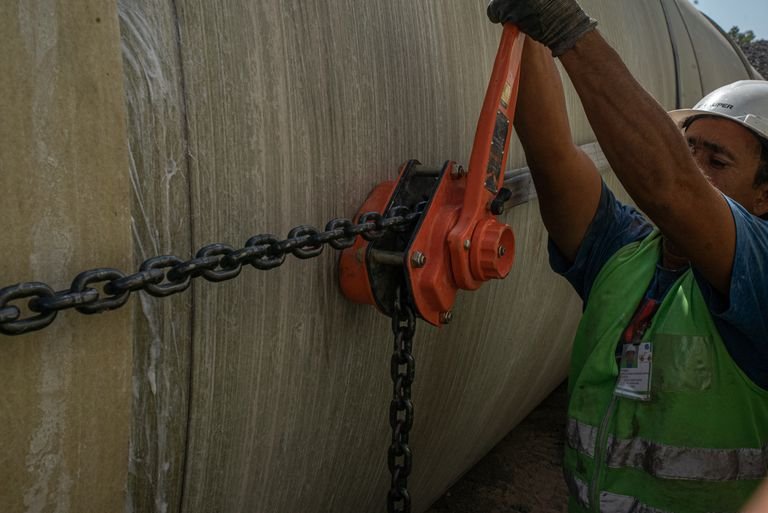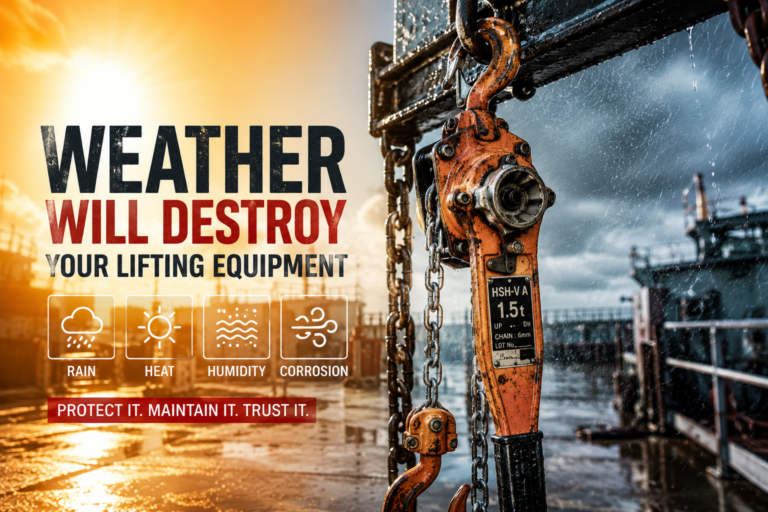
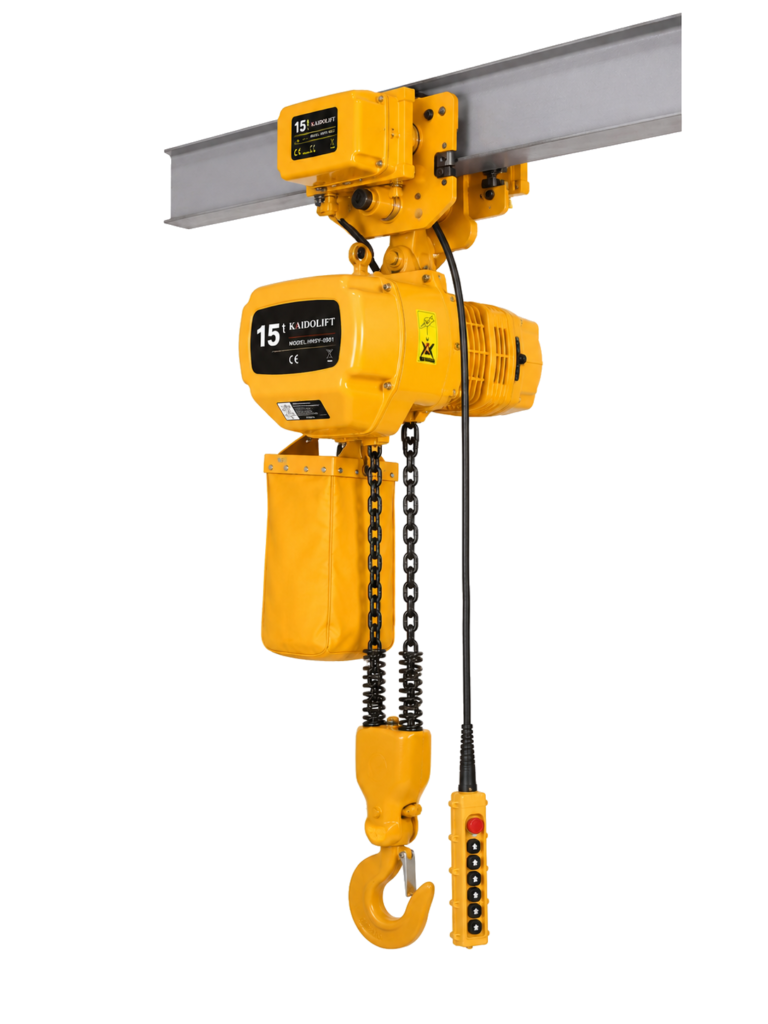
The HHSY Electric Chain Hoist is a widely adopted light-duty electric lifting device in modern industrial systems. Compared with manually driven Chain Blocks, this electrically powered hoist integrates frequency conversion speed regulation, intelligent limit control, overload protection and other integrated intelligent configurations. It features high automation, stable operation, high working efficiency and strong working condition adaptability. As an upgraded alternative to traditional manual lifting equipment and outdated wire rope electric hoists, the HHSY Electric Chain Hoist is fully applicable to sophisticated industrial working conditions such as workshop assembly line operations, precision equipment lifting and high-frequency light-duty hoisting. It serves as a core supporting device for standardized, efficient and refined industrial lifting operations. This document focuses on five key dimensions: accurate model selection for working conditions, industry-specific scenario implementation, latent fault prediction, full-cycle life improvement maintenance, and lean cost reduction management, forming a standardized industrial technical guideline available for equipment procurement, on-site management, hazard prevention and service life extension.
I. Core Adaptive Advantages of HHSY Electric Chain Hoist
Tailored to the high-frequency, high-precision and continuous operational demands of modern industry, the HHSY Electric Chain Hoist is optimized to solve typical pain points of traditional lifting equipment with remarkable scenario adaptability and comprehensive performance. Featuring a compact structure and lightweight body, it occupies minimal space and can perfectly adapt to confined working stations, interlayer assembly lines and low-height restricted workshops, breaking the spatial limitations of conventional lifting equipment.
In terms of operational performance, the equipment is equipped with a silent reduction transmission system, delivering low vibration, smooth lifting and impact-free operation, which meets the non-damage hoisting requirements for precision molds, sophisticated instruments and fragile industrial parts. Its dedicated endless chain structure fundamentally eliminates common failures of wire rope hoists such as rope disorder, wire breakage, extrusion deformation and excessive wear. The chain exhibits excellent fatigue resistance, aging resistance and bending resistance, with a far longer service life than traditional wire rope lifting equipment. Meanwhile, the hoist is equipped with dual mechanical and electrical protection mechanisms to achieve automatic protection against overload, over-travel, electric leakage and short circuits. It supports long-term continuous operation, significantly reduces manual labor intensity, and makes up for the shortcomings of Chain Blocks including high physical consumption, low efficiency and inadaptability to high-frequency operation.
II. Precision Model Selection Standards for Industrial Working Conditions (Procurement and Application Specifications)
The HHSY Electric Chain Hoist covers a complete tonnage range from 0.5T to 5T with a standard lifting height of 3m. It supports multiple configurable combinations including frequency-conventional speed types, fixed-traveling types and standard-explosion-proof types. Different models differ greatly in working condition adaptation boundary, load tolerance, operation accuracy and service life. In the standardized management system of industrial lifting equipment, precise model selection acts as a pre-core control link that directly determines on-site operational safety, equipment stability and long-term maintenance costs. Mismatched parameters will easily lead to overloading failure of small-capacity hoists, low-efficiency loss of large-capacity equipment and component corrosion caused by insufficient environmental adaptability, resulting in frequent failures, premature scrapping and potential safety hazards. Therefore, industrial sites shall select models elaborately based on four core parameters: actual lifting load, operation frequency, operation mode and working environment, so as to completely eliminate risks caused by empirical and arbitrary selection.
1. Tonnage Selection Specifications
Model selection strictly complies with the industrial safety redundancy principle: The rated load of the equipment shall be no less than 1.25 times the maximum on-site lifting weight. Specifically, 0.3T–5T small-tonnage models apply to light-duty working conditions such as conventional material handling and daily maintenance of light equipment; 5T–10T medium-tonnage models are suitable for medium-duty scenarios including mold lifting, medium mechanical assembly and regular workshop hoisting; 10T and above large-tonnage models are designed for heavy-duty operations such as heavy equipment relocation, steel structure component hoisting and warehouse heavy-load handling. Overload operation of small-tonnage equipment is strictly prohibited. Meanwhile, long-term light-load and no-load operation of large-tonnage equipment shall be avoided to prevent uneven stress, abnormal component loss and energy waste.
2. Lifting Height and Operation Speed Selection
Standard 3m–6m lifting height models are preferred for fixed-station operations in conventional workshops; customized models with a lifting height of 10m or above are applicable to high-altitude warehouse shelves, high-rise equipment maintenance and scenarios with large vertical space. The equipment provides two operation modes: conventional constant speed and variable frequency speed regulation. Variable frequency models are prioritized for high-frequency cyclic hoisting, precision workpiece alignment and micro-distance fine-tuning operations, enabling low-speed accurate positioning and high-speed no-load return to balance operation accuracy and construction efficiency. Conventional constant-speed models can be adopted for extensive material handling and intermittent low-frequency hoisting to optimize procurement costs while meeting operational demands.
3. Environmental Adaptation Selection
Standard general HHSY models are applicable to dry and dust-free standard indoor workshops. Upgraded dustproof and waterproof models are required for humid, watery and slightly dusty workshops to improve the protection grade of electrical systems. Standard models are suitable for conventional industrial scenarios without flammable and explosive substances. Special modified explosion-proof models must be adopted for hazardous working conditions requiring explosion and corrosion protection. It is strictly forbidden to replace explosion-proof equipment with ordinary models to avoid safety risks caused by environmental mismatch.
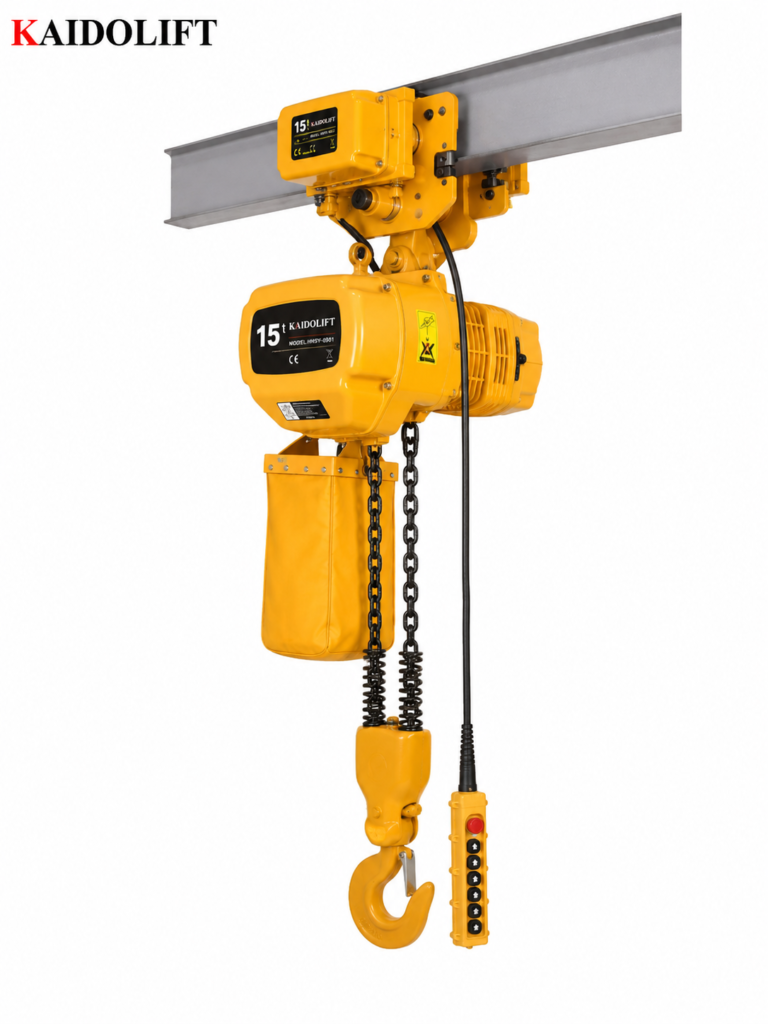
HHSY Electric Chain Hoist (Polipasto Eléctrico de Cadena) | 0.5T to 5T Heavy Duty Industrial Lifting Hoist with Customizable Lift Height
Premium HHSY Electric Chain Hoists (HHSY-A single chain / HHSY-B dual chain). Features standard 3m lift, 0.5-5 Ton capacity, up to 7.8 m/min lifting speed. Full technical specs with extra meter chain weight for professional LATAM buyers. Get factory direct quote!
III. Industry-Specific Scenario Application Solutions
Featuring compact structure, light weight, smooth start-stop, high positioning accuracy and complete protection performance, the HHSY Electric Chain Hoist supports multiple installation forms including fixed suspension, I-beam rail traveling, jib crane matching, gantry crane matching and assembly line integration. It adapts to diverse operation modes such as fixed-point hoisting, reciprocating displacement, high-frequency loading and unloading, precision positioning and temporary maintenance lifting. Different from traditional lifting equipment with single working condition adaptability, this model achieves flexible adaptation according to the operation intensity, accuracy requirements, environmental conditions and working rhythm of various industries. It can meet the differentiated demands of standardized mass-production workshops, scattered infrastructure construction sites, confined-space special maintenance and high-cleanliness precision manufacturing, making it one of the most widely adaptable and practically implemented light-duty lifting devices in modern industry, and has been included in the standardized lifting supporting system of various industries.
1. Machinery Manufacturing and Mold Industry
The machinery and mold industry is dominated by precision mold disassembly and assembly, machine tool accessory replacement and high-precision equipment maintenance, which put forward extremely high requirements for hoisting stability, positioning accuracy and non-damage operation. The variable-frequency HHSY model realizes micro-speed smooth start-stop and impact-free uniform lifting, effectively preventing mold collision and precision component damage. With compact size and flexible installation, it adapts to confined working spaces of machine tool stations, completely replacing traditional manual lifting equipment. It greatly improves the efficiency of mold replacement and equipment maintenance, serving as the standard lifting equipment for precision machinery and mold workshops.
2. Light Industry, Electronics and Warehouse Logistics Industry
Industries such as electronic processing, hardware manufacturing and warehouse logistics have high demands for high-frequency, short-distance and repetitive hoisting operations, where traditional manual lifting is labor-intensive, inefficient and poorly adaptable. Matched with I-beam rails, jib cranes and small gantry cranes, the HHSY Electric Chain Hoist realizes fixed-point and mobile automatic lifting, perfectly fitting assembly line material loading and unloading, warehouse stacking and light goods handling. Capable of long-term continuous operation, it matches the efficient working rhythm of modern intelligent workshops, significantly reduces manual labor intensity and improves the overall operational efficiency of production lines.
3. Construction and Infrastructure Supporting Scenarios
Construction exterior wall operation, small component installation and temporary on-site hoisting are characterized by scattered tasks, light load capacity and unfixed operation points. The HHSY Electric Chain Hoist features light weight, convenient installation and flexible movement without complex erection procedures. It can be quickly fixed on scaffolds, temporary hangers and steel structure supports to meet the demands of small building material hoisting, construction tool handling and auxiliary high-altitude installation. Compared with large lifting equipment, it has low use cost, flexible start-stop control and strong site adaptability, serving as the optimal supporting equipment for scattered light-duty hoisting in construction sites.
4. Electric Power, Mining and Special Maintenance Scenarios
Special scenarios such as power equipment operation and maintenance, underground light-duty mining operation and wind power equipment maintenance are generally featured by confined working spaces, absence of fixed lifting equipment, low operation frequency but high requirements for accuracy and safety. With strong environmental adaptability, stable operation and complete multiple protections, the HHSY Electric Chain Hoist efficiently completes the disassembly, assembly, hoisting and positioning of power accessories and light mining equipment, fully complying with the safety operation specifications of special working conditions and adapting to maintenance and hoisting demands in various confined spaces.
IV. Latent Fault Prediction and Risk Prevention Solutions
Most failures of the HHSY Electric Chain Hoist are not sudden failures but result from long-term accumulation of latent hazards and inadequate daily management. Based on high-frequency fault data of industrial sites, this document sorts out typical latent defects and establishes a normalized early warning and closed-loop risk prevention mechanism, which fundamentally avoids equipment shutdown failures, component damage and lifting safety accidents.
1. Operation Latent Hazards
Start-stop stuttering, low-speed jitter and no-load abnormal noise are mainly caused by insufficient chain lubrication, slight gear wear and stressed deviation of suspension rails. Long-term neglect will lead to severe faults such as chain jamming, transmission stuttering and power failure. Lifting shaking and load positioning deviation during operation are mostly caused by variable frequency parameter drift and loose fixed support points. Timely parameter calibration and structural fastening are required to prevent expanded deviation, workpiece collision and structural equipment damage.
2. Electrical Latent Hazards
Slow button response, start-stop delay, indicator light flickering and slight electric leakage are typical precursors of aging circuits, oxidized contactor dust and loose terminal connections. Start-stop failure of equipment in humid environments is mainly caused by damp and damaged electronic control modules. Without timely troubleshooting, it will easily trigger short circuits, tripping and electric component burnout, which are key electrical safety hazards requiring strict on-site control.
3. Load-Bearing Latent Hazards
Slight chain elongation, increased link clearance, inflexible hook rotation and weakened elasticity of anti-drop clips are initial fatigue characteristics of load-bearing components. These hazards are highly concealed and difficult to identify visually. Long-term high-frequency operation will gradually induce major safety accidents such as chain breakage and hook decoupling falling, which must be included in regular special inspection for early detection and timely disposal.
V. Full-Cycle Life Improvement Maintenance System
Different from basic shallow maintenance such as routine cleaning and simple lubrication in the industry, the full-cycle life improvement maintenance of the HHSY Electric Chain Hoist is a graded, preventive and predictive refined maintenance system established based on equipment fatigue rules, electrical aging cycles and mechanical wear characteristics. Its core goal is no longer limited to temporary fault elimination, but to delay equipment aging, stabilize overall performance, reduce shutdown time and lower replacement frequency through normalized hazard screening, periodic performance calibration, targeted component life extension and working condition adaptation adjustment. Complying with industrial full-lifecycle management standards, this maintenance system adapts to high-frequency continuous operation, intermittent working conditions and harsh environment operation, realizing multi-dimensional improvement in equipment safety, stability and economy, and effectively enhancing comprehensive service efficiency and asset utilization rate.
1. Daily Improved Maintenance (Before and After Daily Operation)
Conduct no-load commissioning tests before daily operation to fully detect the sensitivity of start-stop, frequency conversion regulation and limit protection functions, and check for abnormal noise, jamming and electric leakage. Clean dust and oil stains on chains and equipment surfaces after operation to keep electrical components dry and clean. Regularly verify the effectiveness of hook anti-drop devices and retighten exposed fastening bolts. Strictly prohibit equipment operation with hidden dangers to block loss accumulation from the source.
2. Monthly Performance Calibration Maintenance
Accurately calibrate chain tension and link wear monthly, and supplement special lubricating grease for transmission gears and bearings to ensure smooth transmission. Fully inspect the status of electrical circuits, terminals and contactors, clean dust inside the electric control box and fasten loose connectors. Precisely calibrate core parameters of lifting limit and overload protection to ensure accurate triggering and compliant threshold values of safety protection devices, guaranteeing safe and standard equipment operation.
3. Quarterly In-Depth Life Extension Maintenance
Carry out disassembly inspection on core components of the transmission, braking and electrical control systems every quarter. Accurately detect brake pad wear, brake spring elasticity and gear meshing accuracy, and replace slightly worn and aging parts in a timely manner to prevent minor hidden dangers from evolving into major faults. Conduct stress detection and correction on suspension points and fixed support structures to ensure vertical and unbiased operation, effectively reducing eccentric wear and structural loss.
4. Annual Overall Calibration Maintenance
Entrust professional technicians to conduct rated load calibration, braking performance test and electrical voltage resistance safety test every year, and issue official equipment performance inspection reports. Comprehensively investigate deep-seated problems such as structural aging, component fatigue and performance attenuation, uniformly replace over-worn accessories, and complete overall performance recalibration to ensure long-term stable and compliant operation and maximize the overall service life.
VI. Operation Misunderstandings and Cost Reduction & Efficiency Improvement Management Key Points
Premature equipment aging, frequent failures and high maintenance costs in industrial sites are mainly caused by non-standard operation and extensive equipment management. Sorting out common operation misunderstandings of the HHSY Electric Chain Hoist and implementing refined management can effectively achieve multiple goals including equipment quality improvement, life extension, cost reduction and efficiency enhancement.
First, avoid mismatched load operation. High-speed no-load operation under light load and violent start-stop under heavy load are prohibited. Instant impact load will accelerate fatigue aging of gears, chains and braking components and greatly shorten equipment life. Operation shall strictly follow the principle of “high speed for light load, uniform speed for heavy load and smooth start-stop”. Second, avoid overtime continuous operation. Long-term full-load operation easily causes equipment overheating, electric control module burnout and braking performance attenuation. Operation duration shall be reasonably controlled to reserve heat dissipation buffer time. Third, prohibit mixed use of non-standard accessories. Only original matching accessories are allowed for maintenance and replacement; non-standard accessories will lead to transmission mismatch and failed protection functions, causing potential safety hazards. Fourth, avoid damp and open-air storage. Idle equipment shall be stored in a dry, ventilated and non-corrosive dedicated area with moisture-proof, rust-proof and dust-proof protection to prevent component corrosion and performance degradation.
VII. Conclusion
With the advantages of compact structure, stable operation, complete intelligent protection and efficient and stable performance, the HHSY Electric Chain Hoist accurately adapts to high-frequency, high-precision and confined-space light-duty hoisting demands in various industries, serving as a key supporting device in the modern industrial lifting system. The long-term safe and efficient operation of the equipment relies not on basic operational proficiency, but on five core systems: scientific working condition selection, accurate scenario adaptation, latent hazard prediction, full-cycle life improvement maintenance and refined compliant management. Standardized condition-adaptive selection, normalized hazard prevention, graded life-extending maintenance and standardized operation can comprehensively ensure the stable and compliant operation of HHSY Electric Chain Hoists, effectively reduce failure shutdown rate and comprehensive maintenance costs, and provide solid equipment and technical support for the standardization, safety and high efficiency of industrial lifting operations.